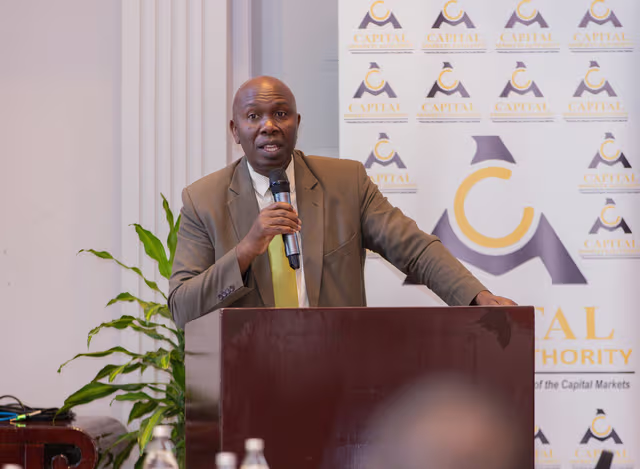
Kiharu MP Ndindi Nyoro has strongly criticized the Safaricom share sale to South Africa’s Vodacom Group during a heated appearance before Parliament’s joint committee on Finance and National Planning and Public Debt and Privatisation. Moreover, he argued that the Sh204.3 billion deal—selling a 15% government stake at Sh34 per share—threatens national interests.
Specifically, Nyoro questioned why the National Treasury proceeded without meaningful public consultation. “Safaricom is not just a company—it’s a national asset that fuels our digital economy,” he told the committee. Therefore, he warned, selling it quietly to a foreign entity sets a dangerous precedent.
Indeed, the Safaricom share sale has sparked intense debate across Kenya. Critics argue it could weaken government oversight of the country’s largest telecom operator. In addition, they fear negative consequences for data security, pricing fairness, and service quality. Nyoro echoed these concerns and furthermore urged the committee to pause the transaction until a full impact assessment is completed.
He also pointed out that Safaricom contributes billions in annual taxes and dividends. “Why surrender future earnings for a one-time cash injection?” he asked. After all, the Sh204.3 billion—while significant—pales against Safaricom’s long-term economic value, especially through M-Pesa’s role in financial inclusion.
On the other hand, supporters claim the sale will help reduce Kenya’s rising public debt. The Treasury says proceeds will fund infrastructure and cut borrowing. However, Nyoro dismissed this reasoning. “We’re mortgaging our future for short-term relief,” he said. Instead, he insisted, the government should explore alternative revenue sources that don’t involve selling strategic assets.
Furthermore, Nyoro challenged the deal’s valuation. At Sh34 per share, he noted, the price appears below market value. For instance, Safaricom shares have recently traded above Sh40 on the Nairobi Securities Exchange. Consequently, he called the discrepancy “suspicious” and demanded an independent audit of how the price was set.
Equally important, he warned that boosting Vodacom’s stake could shift Safaricom’s alignment toward South African priorities. “We must protect our digital infrastructure,” he stressed. After all, telecom networks are as vital as roads or power grids to national security and development.
As a result, Parliament now faces mounting pressure to scrutinize the deal thoroughly. Although the committee cannot block the sale outright, its recommendations carry political weight. Thus, Nyoro urged fellow MPs to prioritize transparency and public interest over speed or convenience.
Notably, this isn’t Nyoro’s first challenge to major state transactions. Known for his populist stance, he has consistently pushed for accountability in government deals. Accordingly, his testimony signals growing legislative concern over asset sales during economic hardship.