Uganda heads to the polls on Thursday in one of its most expensive elections ever—costing nearly $380 million. With 21.6 million registered voters and eight presidential candidates, the Uganda election 2026 appears competitive on paper. However, history suggests a predictable outcome.
Voter turnout remains the biggest unknown. Although registration rose from 18.1 million in 2021 to 21.6 million today, fewer than 60% of eligible voters typically cast ballots. As a result, questions about apathy and democratic legitimacy persist. Notably, women form the majority—11.3 million (53%)—compared to 10.3 million men.
Eight candidates made the final ballot, down from over 200 aspirants. To qualify, each needed at least 9,800 nomination signatures from multiple districts—a rule meant to ensure national support. The frontrunners are incumbent Yoweri Museveni and opposition leader Robert Kyagulanyi (Bobi Wine). Others include Mugisha Muntu, Nandala Mafabi, and Joseph Mabirizi.
Campaigns wrapped up on Tuesday, the last day allowed by the Electoral Commission. Over the past three months, candidates crisscrossed the country, promising jobs, peace, and reform. Yet, Uganda’s electoral rules make a runoff unlikely.
The Constitution requires a candidate to win more than 50% of valid votes. If no one does, a second round between the top two contenders follows. In practice, this has never happened. Since 1996, Museveni has always won outright—often with 60% or more. Even in 2006, when the Supreme Court acknowledged irregularities, it upheld his victory.
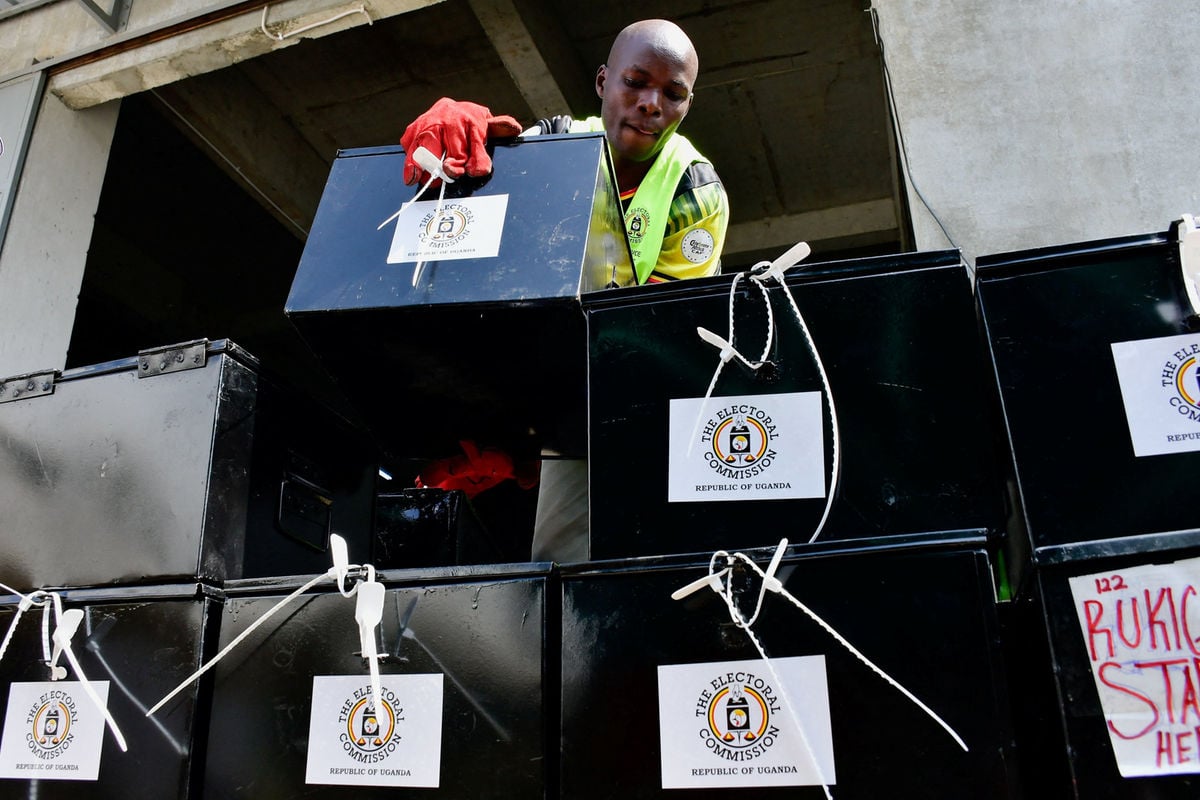
Logistics are massive: 50,739 polling stations will operate from 7 a.m. to 4 p.m. across 146 districts. Ballots will be counted on-site, with party agents and observers present. This scale highlights the operational challenge of running elections in a large, diverse nation.
Parliamentary races may matter more than the presidency. While State House grabs headlines, competition is fiercest below. A staggering 83,597 candidates are vying for just 45,505 seats—including MPs, district leaders, and gender representatives. In Kampala alone, 113 people compete for 10 parliamentary seats.
The official cost is steep: Ush1.387 trillion ($380 million). This includes Ush838.7 billion for ballots and logistics, plus Ush469.5 billion for biometric verification. For a developing economy, this is a heavy fiscal burden.
Campaign spending adds even more pressure. In 2021, parties spent nearly $1.1 billion. This year, estimates from the Alliance for Finance Monitoring suggest total campaign outlays could hit $1.4 billion. Consequently, Uganda’s central bank is already acting to curb inflation from election-related cash flows.
Why does this election matter?
Above all, it tests whether growing voter rolls translate into real participation. It also challenges institutions to deliver credible results amid rising costs. Ultimately, the Uganda election 2026 is less about surprise outcomes—and more about whether democracy can deepen beyond ritual.
READ: UNHCR Backs Kenya’s Plan to Transform Refugee Camps into Integrated Communities