The deepening Kenya-Brazil trade ties mark a strategic shift by two emerging economies. Both aim to reduce reliance on unstable traditional markets. Global trade is under pressure from new US tariffs and supply chain disruptions. Therefore, Nairobi and Brasília are responding with direct dialogue and practical business engagement. This move goes beyond diplomacy—it’s a real-world response to shifting economic currents.
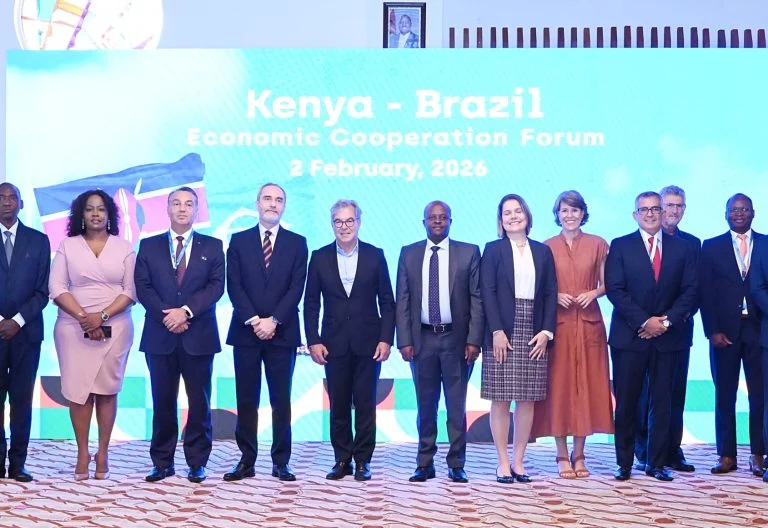
Recently, a forum in Nairobi brought together over 60 companies. Twenty-six were from Brazil, and more than 40 from Kenya. In addition, senior officials from both governments attended. The Kenya-Brazil Economic Cooperation Forum focused on turning interest into action. For instance, John Mwendwa, CEO of Invest Kenya, stressed Kenya’s commitment to a “seamless, transparent, and predictable investment process.” As a result, this message clearly targets foreign investors wary of red tape.
Despite friendly relations, current Kenya-Brazil trade ties remain limited. In 2024, Kenya exported just $1.2 million to Brazil. Meanwhile, imports from Brazil reached $168.3 million. However, officials see this gap not as a failure but as untapped potential. Specifically, Kenya can expand beyond tea and flowers. Moreover, agro-processing, textiles, and renewable energy offer strong export opportunities.
Brazil views Kenya as a gateway to East Africa. Indeed, Jorge Viana of ApexBrasil said Kenya’s strengths match Brazil’s industrial needs. Brazilian expertise in agribusiness and green tech aligns well with Kenya’s role as a regional hub. For example, existing work like Brazil’s support for the Cotton Victoria Project shows early promise. Consequently, this foundation can grow into deeper value chains.
Global food insecurity adds urgency. Nearly 300 million people faced acute hunger in 2024. This crisis was driven by climate shocks and economic instability. Thus, linking Brazil’s farm output with Kenya’s distribution networks could stabilize food supplies. Furthermore, it may shield both nations from global price swings worsened by tariffs.
On the institutional front, progress is underway. KEPROBA and ApexBrasil are finalizing a Memorandum of Understanding. This agreement will support market intelligence sharing and joint trade efforts. Although internal approvals have caused slight delays, the deal is expected before the Kenya International Investment Conference 2026. Importantly, that event will help turn talks into real deals.
This effort reflects a wider trend of South-South cooperation. Developing nations are building alliances outside Western trade systems. For Kenya, diversifying export destinations is essential for resilience. Similarly, Brazil benefits by expanding beyond China and the EU. Hence, such partnerships offer mutual stability in uncertain times.
Of course, challenges remain. Logistics, regulations, and low private-sector awareness must be addressed. Nevertheless, momentum is clear. High-level attention on a once-minor relationship shows serious intent. As Cynthia Nyawira of the Kenya National Chamber of Commerce noted, the trade profile reveals “opportunities to diversify exports, deepen cooperation, and build joint value chains.”
In today’s volatile world, stronger Kenya-Brazil trade ties offer a smart hedge. They demonstrate how emerging economies can create alternatives to fragile global systems. Looking ahead, the next few months will be critical. If successful, KIICO 2026 could mark the start of a lasting partnership. One thing is certain: passive trade is out. Strategic collaboration is in.
READ: Lesotho Minister’s Grandson Released in Mobile Money Fraud Case