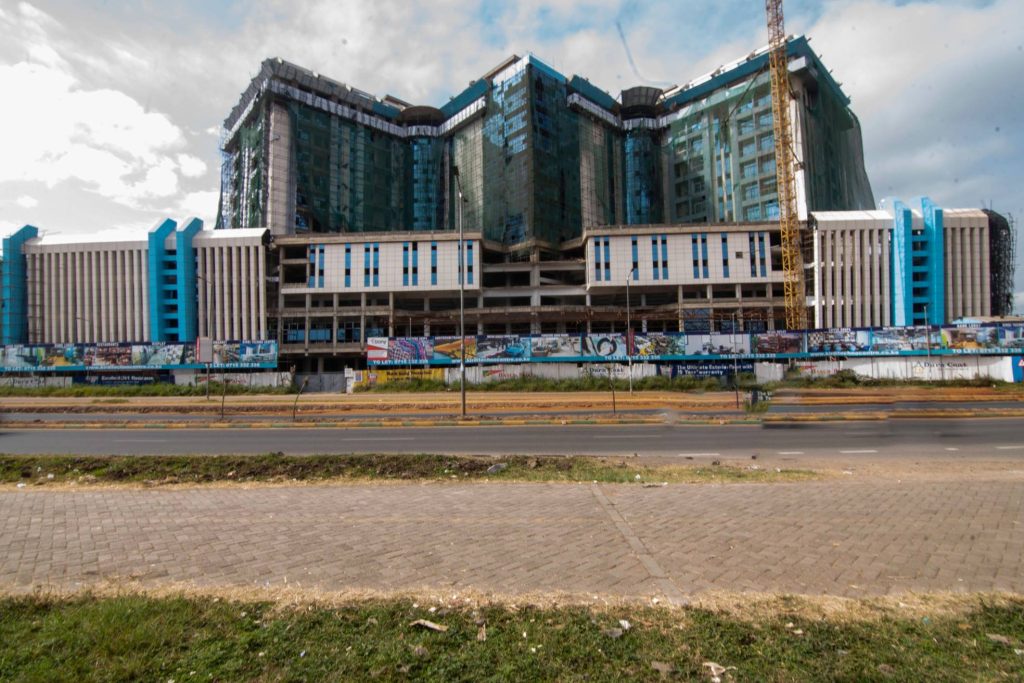
KIRDI Tech Hub delays continue to highlight challenges in Kenya’s flagship innovation projects, even as authorities move to revive the long-stalled development with fresh funding and a new contractor. The project, once seen as a symbol of Kenya’s industrial transformation, now reflects years of missed deadlines and rising costs.
Originally conceived in 2013, the techno-centre aimed to anchor Kenya’s transition into an innovation-led economy. It was designed to host advanced laboratories, testing facilities, and commercial spaces. However, progress stalled early due to funding gaps, contractor disputes, and shifting timelines.
Now, the government has taken a new step forward. The Kenya National Highways Authority has awarded a fresh construction contract to Kingsley Construction Company. The contractor is expected to complete the project by February 2028. At the same time, authorities have injected additional funding to restart stalled works.
The financial scale of the KIRDI Tech Hub has grown significantly. The project has received an extra KES 3.4 billion, bringing the total cost to KES 8.56 billion. This represents a 57 percent increase from the original KES 5.9 billion budget. Such escalation reflects long-standing inefficiencies in project execution.
Initially, planners expected to complete the facility by March 2016. However, deadlines slipped repeatedly. First, timelines shifted to 2022, and then further delays followed. Meanwhile, costs continued to rise as construction slowed and financing weakened.
By January 2024, Nancy Gathungu reported that taxpayers had already spent KES 5 billion on the incomplete structure. At that point, the project remained far from completion. Therefore, concerns over value for money intensified.
Gathungu later stated that financial constraints and unpaid contractor bills had stalled the project. As a result, the country failed to realise expected returns from the investment. Her remarks underscored growing frustration over public infrastructure delays.
Construction stopped completely in 2022 when the original contractor abandoned the site. The firm cited unpaid dues, leaving behind a partially built complex. Consequently, the project entered another phase of uncertainty.
In response, the Kenya Industrial Research and Development Institute board explored alternative solutions. For instance, it considered completing the project through a public-private partnership. However, officials later dropped this plan. Instead, they opted for additional Treasury funding to restart construction.
The KIRDI Tech Hub also reflects a wider trend in Kenya’s infrastructure sector. Several flagship projects have faced similar delays. For example, Konza Technopolis has experienced slow progress due to funding challenges and coordination issues. As a result, these projects have delivered fewer economic benefits than expected.
Despite these setbacks, the vision behind the techno-centre remains ambitious. The complex will include laboratories, lecture halls, and showrooms. In addition, planners have designed an amphitheatre and commercial spaces. The site will also feature restaurants, a three-star hotel, and multi-level parking.
If completed, the hub could support research, innovation, and industrial growth. It could also attract scientific and engineering talent. Therefore, its success remains important for Kenya’s long-term development strategy.
At the same time, delays have already reduced its immediate impact. Years of inactivity have slowed innovation momentum. Moreover, rising costs have increased pressure on public finances.
The revival of the KIRDI Tech Hub signals renewed commitment. However, execution will determine whether the project delivers its intended value. Authorities must ensure consistent funding, effective oversight, and timely delivery.
Ultimately, the project stands as both a warning and an opportunity. It highlights the risks of poor project management. At the same time, it offers a chance to reset and deliver a modern innovation centre.
As construction resumes, stakeholders will watch closely. If completed on schedule, the KIRDI Tech Hub could finally fulfil its promise. If delays continue, however, it may remain another example of unrealised ambition in Kenya’s development journey.
READ: KIPPRA Young Professionals Programme Applications Open