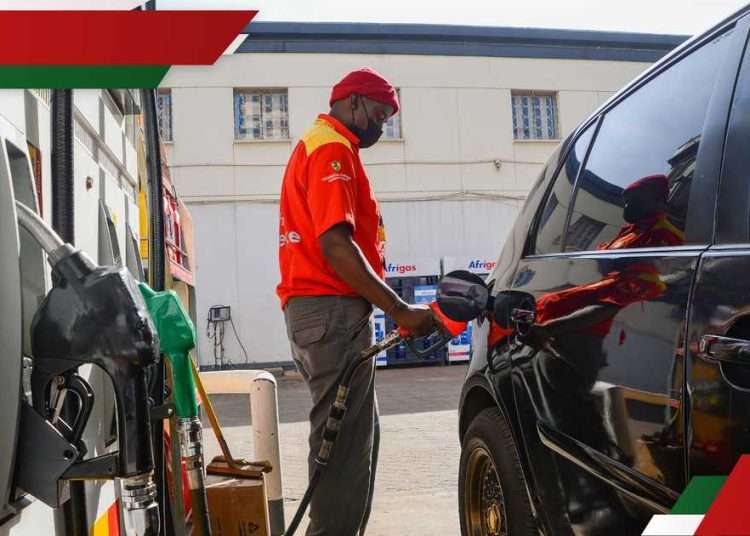
The Energy and Petroleum Regulatory Authority (EPRA) has confirmed a reduction in fuel prices for the January/February 2026 review period. This marks the first decrease in fuel costs after a four-month period of price stability, offering some relief to consumers, especially motorists, at the beginning of the year. The new maximum retail prices will take effect at midnight on January 15 and remain in place until February 14, 2026.
According to the announcement, Super Petrol prices will decrease by KES 2 per litre, while both Diesel and Kerosene prices will fall by KES 1 per litre. This adjustment provides a slight break in fuel costs after a period of steady pricing that had remained unchanged since the last adjustments.
Revised Fuel Prices and Regional Variations
Following EPRA’s announcement, the revised maximum retail fuel prices for Nairobi, the capital city, will now stand at KES 182.52 per litre for Super Petrol, KES 170.47 per litre for Diesel, and KES 153.78 per litre for Kerosene. These new rates represent a modest reduction from the prices in the previous month, where Nairobi motorists had paid KES 184.52 per litre for Super Petrol, KES 171.47 per litre for Diesel, and KES 154.78 per litre for Kerosene.
The price adjustments will be applied uniformly across major urban centers like Mombasa, Nakuru, Eldoret, and Kisumu, with slight variations in rates due to regional transportation costs. The prices in these cities are expected to follow the same trend, with adjustments made to account for the local cost of distributing fuel.
The reduction in fuel prices comes as a welcome relief for both businesses and consumers, particularly in the transportation sector, where fuel costs directly influence the price of goods and services. The timing of the reduction at the start of the year further boosts expectations for a less expensive first quarter for consumers.
Regulatory Framework and Global Oil Market Trends
EPRA’s decision to adjust fuel prices is in line with Section 101(y) of the Petroleum Act 2019, which mandates that fuel price adjustments be made based on trends in the global oil market and other economic factors. Additionally, the changes adhere to the guidelines set in Legal Notice No. 192 of 2022, which outlines the procedures for determining fuel prices in Kenya.
The regulator clarified that the announced prices are inclusive of the 16% Value Added Tax (VAT) as stipulated in the Finance Act 2023 and subsequent amendments. This means that the taxes on fuel have been factored into the final retail price, ensuring compliance with national tax laws.
Furthermore, the pricing structure includes adjustments to excise duties, which have been recalibrated to reflect inflation rates as per Legal Notice No. 194 of 2020. These modifications are essential to maintain fairness in the pricing of fuel while factoring in the impact of economic fluctuations.
EPRA also pointed out that these changes in fuel prices were influenced by shifts in the global oil market, where supply and demand dynamics play a critical role in setting the cost of crude oil. Volatility in the global oil market can lead to either price hikes or reductions, and EPRA’s adjustments ensure that Kenyan consumers are impacted by global trends in a balanced and transparent manner.
Impact on Consumers and the Broader Economy
The reduction in fuel prices comes at a time when many consumers have been grappling with higher living costs, including increased prices for essential goods and services. For motorists, the lower fuel prices are expected to result in reduced transportation costs, which could ease the financial strain for both individuals and businesses that rely on transport for their daily operations.
The decrease in fuel prices is also seen as a relief for industries that depend heavily on fuel for operations, including logistics, manufacturing, and agriculture. With fuel prices being one of the largest operational costs for businesses, a reduction in fuel prices could lead to a decrease in the cost of production, which may ultimately be passed on to consumers in the form of lower prices for goods and services.
In addition, the change in fuel pricing is expected to have a broader positive impact on inflation rates. With fuel costs playing a significant role in the overall cost of living, a drop in fuel prices can help mitigate inflationary pressures, providing some breathing room for consumers as they navigate an uncertain economic environment.
Consumer Reactions and Market Sentiment
The public response to the announcement has largely been positive, with many consumers expressing relief at the drop in fuel prices. Motorists, in particular, are likely to feel the impact at the pump, as they enjoy a reduction in the daily costs associated with commuting and transporting goods. However, some observers have raised concerns about the longer-term sustainability of these price cuts, particularly if global oil prices begin to rise again.
Businesses in sectors such as transportation, logistics, and retail are also welcoming the price adjustments, as the reduction in fuel costs could help to ease operational expenses. However, the market remains cautious, with many wondering whether the price reduction will be enough to offset the broader economic challenges, including inflationary pressures and global supply chain disruptions.
Future Outlook for Fuel Prices
Looking ahead, the future of fuel prices in Kenya will depend largely on global oil market trends and the economic climate. While the current price reduction provides short-term relief, the risk of future price hikes remains a possibility if global oil prices rise due to geopolitical factors, changes in supply, or fluctuations in currency exchange rates. EPRA will continue to monitor these trends and adjust fuel prices accordingly to maintain a fair and transparent pricing system for consumers.
The next round of price adjustments is likely to occur in February 2026, when EPRA will review fuel prices once again based on the latest developments in the global oil market. Consumers and businesses will be watching closely to see how EPRA responds to any new fluctuations in the cost of crude oil and whether further price reductions or increases are on the horizon.