Chad has closed its eastern border with Sudan following deadly weekend clashes linked to Sudan’s ongoing civil war. The violence killed five Chadian soldiers and three civilians, according to two sources who spoke with Reuters. The border closure takes effect immediately and will remain in place until further notice. This decisive action comes as Chad seeks to prevent the spillover of Sudan’s conflict onto its own territory. The decision marks a significant escalation in response to cross-border violence that has periodically affected the region.
Deadly Weekend Violence Prompts Action
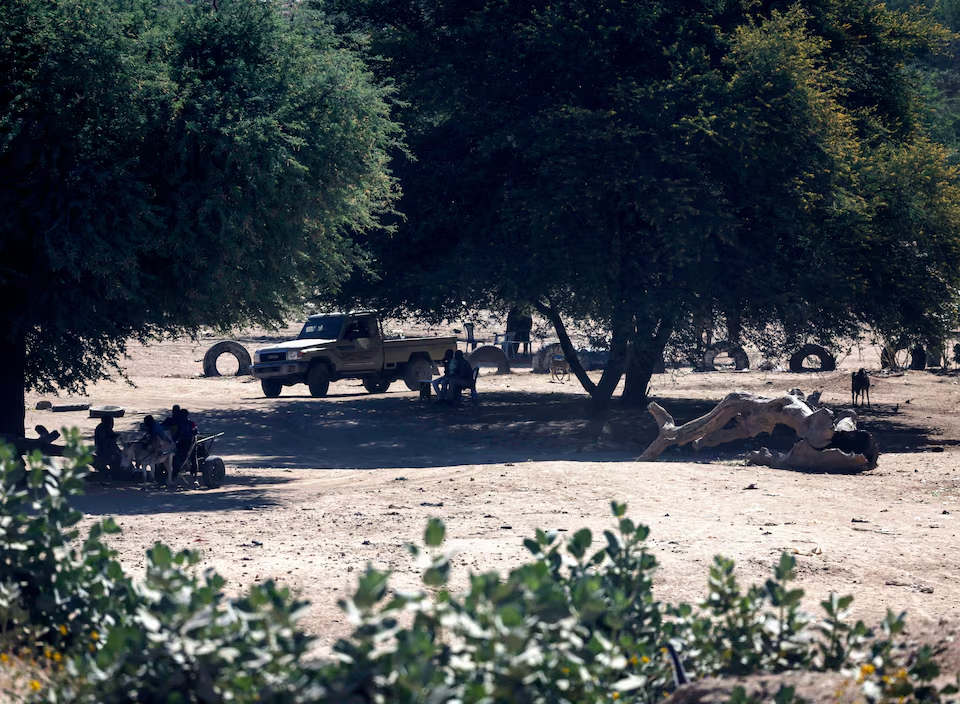
The clashes occurred on Saturday in the border town of Tine, which straddles the frontier between the two nations. Fighting erupted between Sudan’s paramilitary Rapid Support Forces and militia fighters loyal to the Sudanese government. A Chadian official confirmed the casualties, stating that five soldiers and three civilians lost their lives. Additionally, 12 people sustained wounds during the violence. A border guard officer in Tine confirmed the deaths and emphasized the need for enhanced security measures to protect civilians on the Chadian side of the border.
The conflict in Sudan between the Sudanese army and the Rapid Support Forces began in April 2023. Since then, violence has periodically spilled over into Chadian territory, causing casualties and property damage. Previous incidents include a drone attack last year that killed two Chadian soldiers. Local authorities and a security source reported that attack, though the perpetrator remained unidentified. These recurring incidents have gradually heightened tensions along the porous border region.
Government Cites Repeated Violations
Chad’s government issued an official statement on Monday explaining the rationale behind its decision. The border closure aims to address “repeated incursions and violations committed by forces in Sudan’s conflict.” The statement emphasized that the move “aims to prevent any risk of the conflict spreading to our soil, to protect our fellow citizens and refugee populations, and to guarantee the stability and territorial integrity of our country.” This language reflects growing concern in N’Djamena about the destabilizing influence of the neighboring civil war.
The two sources who confirmed the troop deaths spoke on condition of anonymity. They were not authorized to speak to the media about the incident. Both sources indicated that additional Chadian troops are now deploying to the affected area. This military buildup suggests Chad is preparing for potentially prolonged border security operations. The government clearly views the situation as requiring a sustained response rather than temporary measures.
Regional Implications of Border Closure
The border closure carries significant implications for the already troubled region. Eastern Chad hosts a large population of Sudanese refugees who fled the ongoing conflict. Humanitarian operations across the border may face disruption. Trade between the two nations, already limited by the conflict, will likely cease entirely. Local communities with family and economic ties on both sides of the frontier now face separation. The human cost extends beyond the immediate casualties of weekend violence.
Ahmat Yacoub from the Center for Studies for the Development and Prevention of Extremism offered a sobering assessment. “One thing is certain: whether we like it or not, Chad now appears to be a party to the conflict,” he said. This observation underscores how difficult neutrality becomes when violence repeatedly crosses international boundaries. The think tank’s analysis suggests Chad may face increasing pressure to take sides or actively defend its territory against encroaching factions.
International Response Remains Muted
Neither Sudan’s army nor the Rapid Support Forces have responded to requests for comment on the incident. The silence from both warring parties raises questions about their willingness to respect Chad’s territorial integrity. International observers will watch closely for any signs of retaliation or further cross-border operations. The United Nations and African Union may face pressure to mediate between the countries to prevent wider regional conflict.
The border closure represents a significant policy shift for Chad. Previous incidents, including last year’s drone attack, did not trigger such a comprehensive response. The death of five soldiers in a single incident appears to have crossed a threshold for the Chadian government. Officials clearly believe that previous passive responses failed to deter cross-border violence. Stronger measures now appear necessary to protect national sovereignty and civilian populations.
Humanitarian Concerns Mount
Refugee populations in eastern Chad face particular vulnerability following the border closure. Many fled Sudan precisely to escape the violence now threatening to follow them across the frontier. The closure may complicate humanitarian aid delivery to camps already straining under limited resources. Aid organizations will need to adjust their operational plans to account for the new restrictions. The international community may need to increase support for Chad as it shoulders this additional burden.
Local authorities along the border face the immediate challenge of implementing the closure effectively. The region’s terrain makes comprehensive border control difficult. Smugglers and armed groups have long exploited the porous frontier. Preventing all cross-border movement will require significant resources and coordination. The newly deployed troops will play a crucial role in this effort.
Looking Ahead
The indefinite nature of the closure leaves communities in limbo. No timeline exists for when normal movement might resume. The reopening depends entirely on security conditions along the border. Those conditions, in turn, depend on developments in Sudan’s civil war. With no end to that conflict in sight, the border could remain closed for the foreseeable future.
For now, Chad has drawn a clear line. The message to Sudan’s warring factions is unmistakable: cross-border attacks will no longer be tolerated. Whether this强硬 stance succeeds in deterring further violence remains to be seen. The coming weeks will test both Chad’s capacity to enforce the closure and the willingness of Sudanese armed groups to respect it. The stability of the entire region may hang in the balance.