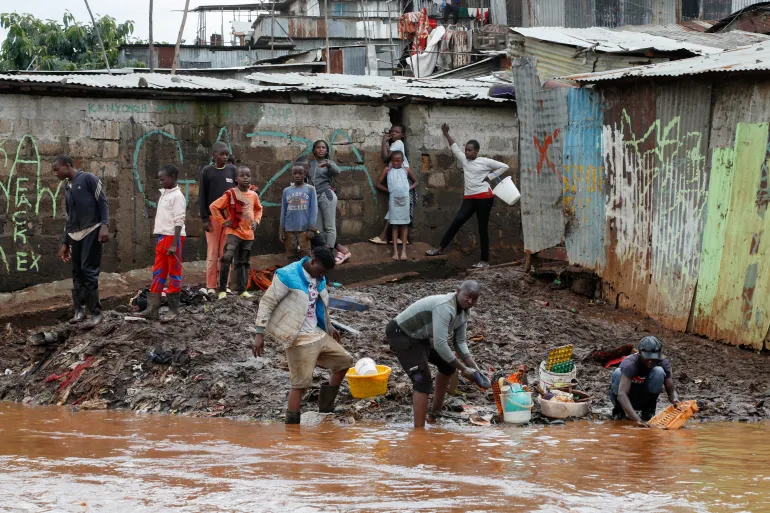
Kenya flood crisis continues to raise alarm after devastating floods killed at least 169 people between March and April 2024. One of the worst tragedies occurred when a flash flood swept through a rural village and killed 42 residents. The disaster highlighted deep weaknesses in the country’s infrastructure, environmental management, and urban planning systems.
Floods themselves are natural events. They occur after intense storm rainfall and play an important ecological role. Floodwaters spread across flood plains where silts settle, river aquifers recharge, and nutrients accumulate. Kenya’s annual rainfall varies widely across the country. Western Kenya receives about 2,000 millimetres of rainfall each year, while the northern drylands receive less than 250 millimetres. Despite this variation, storm rainfall occurs across the country. Because of this, floods can happen in almost any region.
However, the Kenya flood crisis has become more severe in recent years. Experts say the growing destruction caused by floods is linked to environmental changes, land degradation, and urban expansion. These factors have increased the speed and volume of stormwater runoff during heavy rains.

One major factor is landscape transformation in rural areas. Human activities have changed the natural condition of the land. Settlement expansion, road construction, deforestation, livestock grazing, and crop farming have reduced vegetation cover. As a result, rainfall no longer infiltrates the soil effectively. Instead, much of the water flows quickly across the land surface.
This rapid runoff increases the force of floodwaters. It also reduces groundwater recharge. The Kenya flood crisis has therefore intensified as rivers receive large volumes of stormwater within short periods.
Research models used in East Africa show how severe this transformation can be. When forested land becomes livestock pasture, the peak flood magnitude can increase up to twenty times. Such changes destabilise landscapes and make rivers more destructive during heavy storms.
Catchment degradation also triggers landslides and soil erosion. Infrastructure such as dams, culverts, irrigation systems, and roads can be washed away by powerful floodwaters. Across Kenya’s northern drylands, studies show that more than 90 percent of rangelands have experienced degradation. Overgrazing in particular has significantly increased stormwater runoff in these areas.
Urban development has also worsened the Kenya flood crisis. Rapid population growth has pushed cities to expand faster than infrastructure can support. Nairobi offers a clear example of this problem.
Large numbers of residents live in informal settlements with poor drainage systems. These areas often lack proper roads, stormwater channels, and sanitation infrastructure. During heavy rainfall, water flows quickly through these settlements and causes severe flooding.
Another challenge is the destruction of wetlands and riparian zones. Riparian zones are natural areas along rivers and water bodies that help absorb excess water during storms. However, development projects have gradually replaced these natural buffers with buildings and paved surfaces.
Green spaces in cities are also disappearing. Pavements, rooftops, and roads prevent rainwater from soaking into the ground. Instead, almost all storm rainfall becomes runoff that moves rapidly through urban areas.
As Kenya’s population grows, urban pressures will likely increase. Experts estimate that by 2050, about half of Kenya’s population will live in urban areas. Without proper planning, the Kenya flood crisis may worsen significantly.
Another factor contributing to urban flooding is groundwater extraction. Nairobi faces persistent water shortages, which has led to widespread drilling of boreholes. Many of these boreholes pump large volumes of groundwater from underground aquifers.
Over-extraction causes the water table to decline. As aquifers compress, the ground surface can slowly sink. The heavy weight of buildings also contributes to this process. The result is ground subsidence that creates low-lying areas where floodwater collects during storms.
Flood risks also increase when people settle in vulnerable areas. Many low-income communities occupy flood plains or vacant land near rivers. These areas are naturally prone to flooding, especially during heavy rainfall.
Despite these risks, settlement continues in these zones because affordable land is scarce. This pattern increases exposure to disaster and deepens the Kenya flood crisis.
Addressing these challenges requires both rural and urban solutions. In rural regions, restoring natural vegetation along rivers and flood plains can help slow runoff. Vegetation absorbs rainfall and reduces soil erosion.
Existing laws already protect riverbanks and riparian areas. However, enforcement remains weak. Many communities rely on these areas for grazing, farming, or settlement. Stronger monitoring and land management policies could help protect these critical ecological zones.
Urban areas require different interventions. Cities must develop proper stormwater drainage systems capable of handling heavy rainfall. These systems typically include large channels, pipes, and culverts that carry stormwater away from populated areas.
Regular maintenance is equally important. Drainage channels often become blocked by garbage and debris. Clearing these systems before rainy seasons can reduce flood risks significantly.
Wastewater and solid waste must also be managed separately from stormwater drainage. In many parts of Nairobi, sewage flows directly into storm drains. This practice worsens flooding and creates serious public health risks.
Urban planning reform is also essential. Corruption and weak enforcement have allowed unsafe developments to spread across many cities. Buildings often extend right up to riverbanks, leaving little space for floodwaters to spread safely.
Modern cities often include flood storage basins designed to temporarily hold stormwater during heavy rains. Unfortunately, such solutions are difficult to implement in Nairobi because development has already consumed most available space near rivers.
Authorities must therefore prioritize protecting remaining riparian zones. Clear buffer zones should be established along rivers and streams. These areas must remain free from development so they can absorb excess water during storms.
Ultimately, the Kenya flood crisis reflects deeper challenges related to environmental management and urban planning. Without stronger enforcement of land-use laws and improved infrastructure investment, flooding will likely continue to cause destruction.
Kenya’s rapid urbanisation requires long-term solutions that combine environmental restoration, infrastructure development, and responsible land management. Only by addressing these structural issues can the country reduce flood risks and protect vulnerable communities from future disasters.