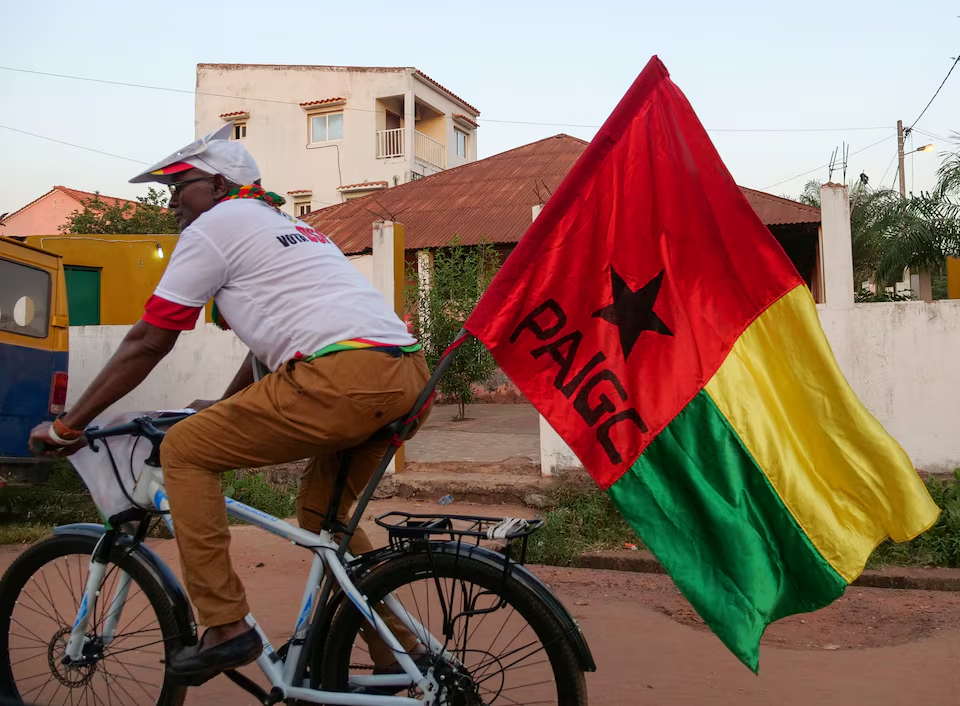
The military junta that seized power in Guinea-Bissau has released a key opposition leader and pledged to form an inclusive government. The moves appear aimed at appeasing the West African regional bloc ECOWAS, which suspended the country after the November coup. Former Prime Minister Domingos Simoes Pereira, leader of the historic PAIGC party, was freed from detention but remains under house arrest. Interim President Major-General Horta Inta-a announced plans to allocate cabinet seats to major political parties. Consequently, this signals a tentative step toward political reconciliation, though under continued military oversight.
The junta, calling itself the Military High Command, toppled President Umaro Sissoco Embalo on November 26. It disrupted elections and installed Inta-a as interim leader. In a letter to ECOWAS, Inta-a vowed to form an inclusive government with three ministerial posts each for the PAIGC and the Party for Social Renewal. The junta also stated all political prisoners would be released. These concessions follow sustained regional pressure for a swift return to civilian rule after the ninth coup in West and Central Africa in five years.
Junta Makes Calculated Concessions to ECOWAS
The release of Domingos Simoes Pereira is a significant gesture. As leader of the PAIGC, the party that led the independence struggle, Pereira is a major political figure. His detention since the coup symbolized the junta’s repression of dissent. However, his continued house arrest on suspicion of economic crimes shows the military’s reluctance to grant full freedom. This half-measure allows the junta to claim progress while maintaining control over a potential rival.
The promise of an inclusive government follows a similar logic. By offering portfolios to the PAIGC and PRS, the junta attempts to co-opt the political elite and legitimize its rule. It also divides the opposition, making unified resistance more difficult. The PRS leader, Fernando Dias, has reportedly left the Nigerian embassy where he sought shelter and is no longer facing arrest. These actions are designed to mollify ECOWAS and potentially avert harsher sanctions, such as asset freezes or travel bans on junta members.
The Stalled Electoral Process and New Timeline
The coup abruptly halted presidential and legislative elections. Armed men seized ballots and destroyed servers containing partial results, according to the electoral commission. This violence made completing the vote impossible. Last month, a presidential decree set a new election date for December 6, 2026. This lengthy timeline, almost a full year away, suggests the junta intends a prolonged transition period. It provides ample time to consolidate power and influence the political landscape before any vote.
ECOWAS had initially demanded a quick restoration of constitutional order and a resumption of the electoral process. The December 2026 date likely falls short of the bloc’s expectations for speed. However, the junta’s recent concessions on an inclusive government and prisoner releases may buy it some diplomatic leeway. The regional body must now decide whether to accept this gradualist approach or insist on a faster return to civilian rule, risking further confrontation with the military leaders.
Regional Context of Democratic Backsliding
The Guinea-Bissau coup is part of a disturbing regional pattern. It is the ninth successful putsch in West and Central Africa since 2021. Neighboring countries like Mali, Burkina Faso, and Niger are also under military rule, having expelled French forces and turned toward Russia. This creates a bloc of junta-led states that can provide mutual support and diminish ECOWAS’s leverage. The regional body’s ability to enforce democratic norms is being severely tested.
Guinea-Bissau’s history of instability makes it particularly vulnerable. The country has experienced multiple coups and attempted coups since independence. Political violence is often intertwined with drug trafficking, as the nation is a transit point for Latin American cocaine bound for Europe. The military’s involvement in politics is deep-rooted. Therefore, achieving a stable, inclusive government will require more than just cabinet appointments. It demands fundamental reforms to civil-military relations and state institutions, a challenge far beyond the current junta’s stated intentions.
Challenges to Forming a Genuinely Inclusive Government
The promise of an inclusive government faces several practical hurdles. First, the military will likely retain control over key ministries like defense, interior, and finance, limiting the real power of civilian appointees. Second, political parties may be reluctant to join a government lacking democratic legitimacy, fearing they will be seen as collaborators. The PAIGC and PRS must weigh the benefits of having a seat at the table against the risk of legitimizing military rule.
Furthermore, the definition of “inclusive” remains narrow. It currently encompasses only two major parties, excluding smaller groups and civil society. True inclusivity would involve a broader national dialogue to address the root causes of the country’s chronic instability. Without such a process, the proposed government may simply be a facade for continued military dominance, temporarily acceptable to ECOWAS but unsustainable in the long term for Guinea-Bissau’s citizens.
The Path Ahead and International Scrutiny
The international community, led by ECOWAS, will closely monitor the junta’s next steps. Key benchmarks will include the formal establishment of the inclusive government, the lifting of house arrest on Pereira, and concrete preparations for the December 2026 elections. The junta will also need to allow freedom of assembly and expression for all political actors. Any backtracking on these fronts will likely trigger stronger regional sanctions.
For the people of Guinea-Bissau, the immediate priority is stability and economic recovery. The coup disrupted governance and likely scared off investors and donors. A prolonged transition prolongs this uncertainty. While the promise of an inclusive government offers a glimmer of hope, past experience with juntas in the region suggests cautious skepticism is warranted. The true test will be whether military leaders willingly cede power to civilians through a credible electoral process next year.