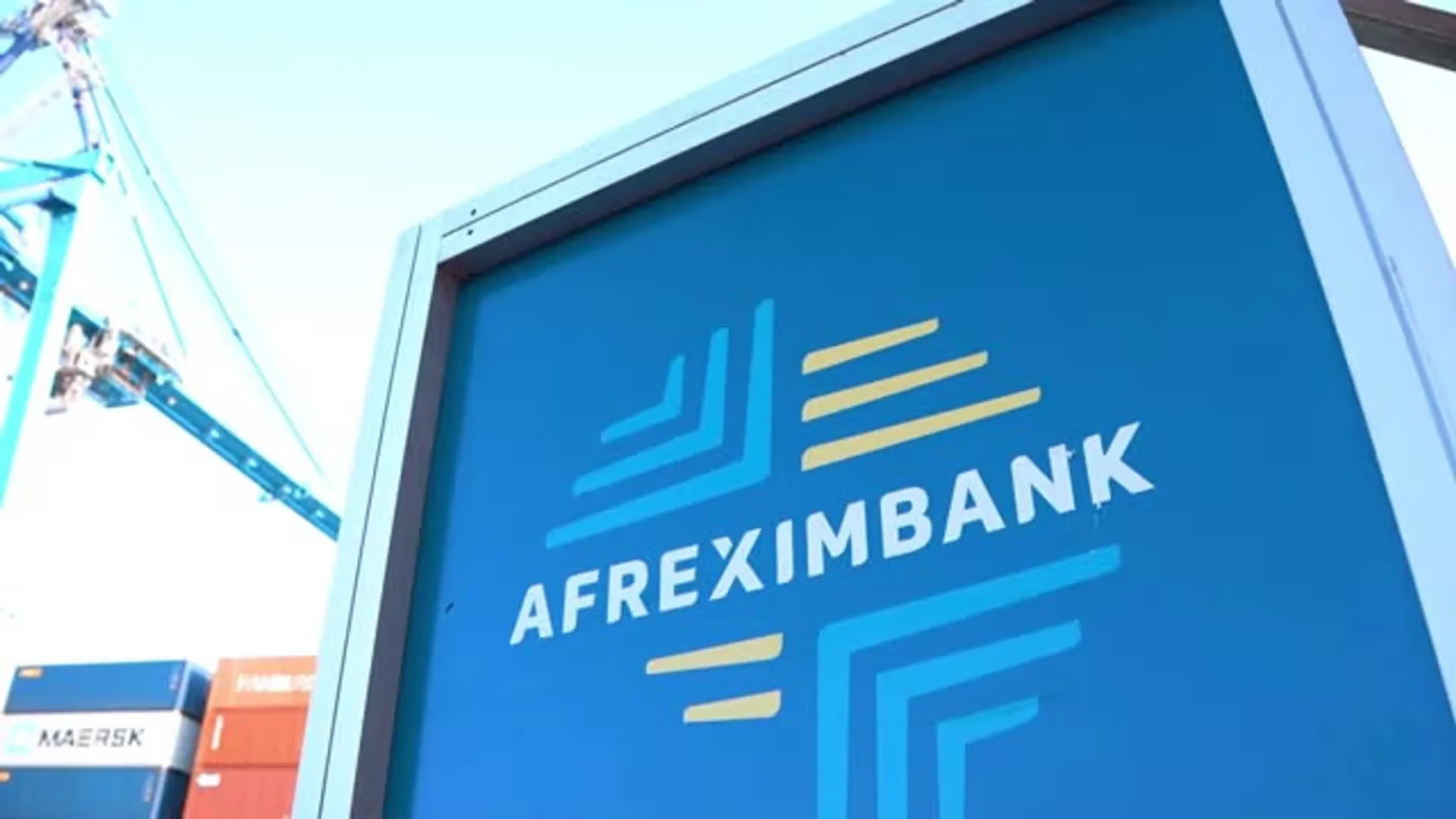
In a bold move that is shaking the African banking sector, Fitch Ratings has downgraded the long-term issuer credit rating of Afreximbank, the African Export-Import Bank. This downgrade comes at a time when the bank’s role in financing intra-African trade and economic development is increasingly under scrutiny. Along with the downgrade, Fitch announced it would withdraw all ratings and cease its analytical coverage of the bank, signaling an end to its relationship with one of Africa’s largest multilateral financial institutions.
The Downgrade: What Led to Fitch’s Decision?
Fitch Ratings attributed the downgrade to a reassessment of Afreximbank’s business profile and its role as a policy-driven institution. The agency highlighted rising restructuring risks and the bank’s reduced policy importance in light of recent shifts in the African financial landscape. According to Fitch, the downgrade reflects a reassessment of Afreximbank’s overall position, suggesting that the institution is now facing heightened credit and political risks across the many countries in which it operates.
While Afreximbank has long been seen as a pivotal player in African trade and development financing, Fitch expressed concerns that the bank’s business model may no longer benefit from the same level of implicit preferential treatment that multilateral lenders traditionally received in sovereign debt situations. Recent developments, according to Fitch, indicate that Afreximbank can no longer be considered insulated from the risks of sovereign debt restructuring, a factor that has caused its rating to be lowered.
High Business and Governance Risks
In addition to the reassessment of its role, Fitch pointed to growing business, governance, and operating environment risks as contributing factors to the downgrade. The agency noted that while Afreximbank continues to benefit from strong capital buffers and solid liquidity, these strengths are increasingly counterbalanced by its exposure to markets with weak credit quality, elevated political risk, and low income levels.
The bank’s exposure to these jurisdictions, Fitch argues, increases volatility in asset quality and earnings over time, making it more susceptible to unforeseen economic and political shifts. The agency’s statement paints a picture of an institution struggling with increasing instability in the countries where it operates—many of which are prone to political unrest, economic challenges, and governance issues that undermine the bank’s stability.
Fitch’s decision to downgrade Afreximbank and end its analytical coverage comes at a critical moment for the bank. While Afreximbank has grown significantly since its inception, becoming a crucial actor in African trade financing, the institution now finds itself at a crossroads, facing both external economic pressures and internal challenges.
Afreximbank’s Response: Strong Foundations Amid Challenges
In response to the downgrade, Afreximbank has firmly rejected the Fitch assessment, stating that the agency’s analysis does not fully capture the bank’s legal protections, treaty-based framework, and its development mandate. Afreximbank emphasized that its business model remains robust, underpinned by strong shareholder relationships and treaty-based protections ratified by its member states.
The bank has been instrumental in promoting intra-African trade and facilitating economic development financing across the continent. Afreximbank reaffirmed its commitment to supporting Africa’s economic integration and growth, particularly through initiatives that foster trade between African nations and bolster regional economic cooperation.
Despite the challenges presented by the Fitch downgrade, Afreximbank’s leadership remains confident in its ability to continue fulfilling its mandate. The bank also pointed out that its long-standing shareholder relationships and legal frameworks provide a solid foundation for future growth, even in the face of external market volatility.
The Implications of the Downgrade
The Fitch downgrade and the subsequent withdrawal of ratings are likely to have a range of implications for Afreximbank, its stakeholders, and its role in Africa’s financial ecosystem. The immediate impact will be on investor confidence, as the downgrade could make it more challenging for Afreximbank to raise capital or secure favorable terms in international markets. Credit rating downgrades often lead to higher borrowing costs, as investors demand higher yields to compensate for perceived risks.
Moreover, the withdrawal of Fitch’s coverage may reduce Afreximbank’s visibility in global financial markets, potentially leading to reduced interest from international investors and financiers. This loss of analytical coverage might also impact the bank’s ability to attract new investment opportunities and strengthen its influence in the international financial community.
However, Afreximbank’s robust capital base, combined with its strong relationships with African governments and multilateral organizations, may help it weather these short-term challenges. The bank’s strategic focus on sustainable economic development and trade finance within Africa positions it well to continue playing a vital role in fostering intra-African trade and economic integration.
The Broader Context: A Changing Landscape for African Banks
Fitch’s decision to downgrade Afreximbank also highlights broader shifts in the African banking landscape. Over the years, African multilateral lenders have benefited from significant support and preferential treatment in international markets. However, as Africa faces mounting sovereign debt and political instability in various regions, these lenders are increasingly coming under the microscope.
For many African banks, sovereign risk and political volatility are becoming critical factors in their creditworthiness. With increasing pressure on government budgets, rising debt levels, and political unrest in several countries, African financial institutions are grappling with challenges that require more sophisticated risk management frameworks and adaptive strategies.
The downgrading of Afreximbank could signal a shift toward more stringent evaluations of African financial institutions by global credit rating agencies. In the future, African banks may need to develop more robust risk management strategies and transparent governance practices to maintain credibility in international markets.
Looking Ahead: Afreximbank’s Path Forward
While Afreximbank faces an uncertain short-term future in light of Fitch’s downgrade, the bank’s leadership remains optimistic about its long-term prospects. As one of the key drivers of intra-African trade and economic integration, Afreximbank is likely to continue playing a significant role in Africa’s development. The bank is already exploring new ways to strengthen its balance sheet, improve its operational efficiency, and expand its influence in the global trade finance market.
The recent downgrade and the evolving challenges for Afreximbank should be seen as a call for increased vigilance and adaptability in the face of shifting economic realities. Whether through improving its risk management framework, diversifying its funding sources, or fostering stronger relationships with international investors, Afreximbank has the potential to overcome these challenges and continue contributing to Africa’s economic development.