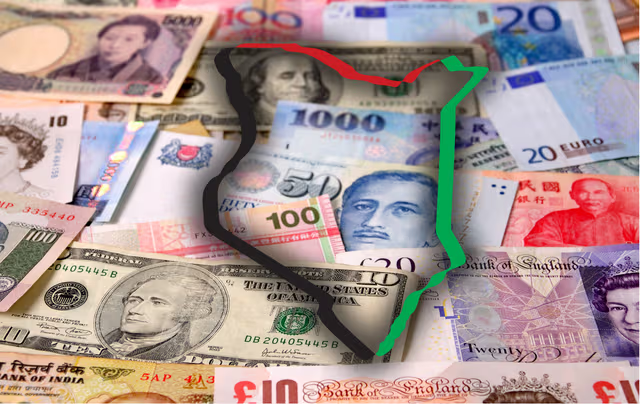
Destroying Kenyan currency sparked national debate after a viral TikTok video led to the arrest of social media user Maximilian Motara. The incident shows how the search for online attention can cross legal limits when it involves the destruction of legal tender.
Motara likely expected his videos to go viral when he posted clips of himself tearing Kenyan 100 shilling notes. Instead, the videos attracted the attention of investigators. Detectives from Kenya’s Banking Fraud Investigations Unit arrested him early Tuesday morning after the clips circulated widely online.
The videos reportedly showed Motara holding several 100 shilling notes and ripping them apart while filming himself. Each note carries a value of about 0.77 US dollars. However, the value of the money is not the legal issue. The problem lies in the deliberate act of destroying Kenyan currency.
Kenyan law clearly prohibits mutilating or defacing banknotes. Section 367A of the Kenyan Penal Code defines this action as a criminal offense. Anyone found guilty may face up to three months in prison. A fine of 2,000 Kenyan shillings may also apply. Courts can impose both penalties depending on the case.
Authorities enforce this law to protect the integrity of the national currency. Banknotes must remain usable and recognizable. Damaged notes cannot circulate easily in the economy. As a result, they must be replaced.
Financial experts often highlight an important point about money. Once a banknote enters circulation, it becomes part of a national system. It is not simply private property. Even if it sits in someone’s wallet, that person cannot destroy it deliberately. Because of this rule, destroying Kenyan currency violates national financial laws.
The Central Bank of Kenya has warned about the misuse of banknotes in recent years. Some people use money as decoration during weddings or celebrations. Others fold, staple, glue, or tear notes to create displays. Social media trends have also encouraged these practices.
These actions may appear harmless online. However, they damage banknotes and shorten their lifespan. When large numbers of notes become unusable, the government must print replacements. Printing new currency requires resources and funding.
Economists say the public ultimately bears those costs. Taxpayers help fund the printing of new banknotes. For that reason, authorities discourage any practice that damages money. Destroying Kenyan currency therefore creates consequences beyond the individual involved.
The arrest of Motara has also started a wider conversation about social media culture. Many creators compete for views and followers. Viral fame can bring attention and online influence. Because of this pressure, some people take extreme actions to stand out.
Experts in digital media say creators sometimes underestimate legal risks. A video that seems entertaining can still break the law. The internet may spread content quickly. However, the legal consequences remain real.
In the case of destroying Kenyan currency, the law leaves little room for interpretation. Deliberate damage to banknotes is illegal. The rule applies regardless of whether the act occurs online or offline.
Public reactions to the arrest have been mixed. Some people believe the case sends an important warning. Others argue that influencers need better awareness of financial laws. Regardless of opinions, the case highlights the limits of viral content.
Authorities say protecting banknotes helps maintain trust in the financial system. People must believe that money remains valid and usable. Damaged currency weakens that confidence. As a result, governments protect legal tender through strict regulations.
Officials continue to urge citizens to handle banknotes responsibly. They discourage writing on money or tearing it. They also warn against using notes as decoration or props. These actions reduce the life of the currency.
The Motara case shows how quickly online actions can lead to legal trouble. What begins as entertainment can become a criminal matter. Destroying Kenyan currency for attention may seem dramatic on social media. Yet the law treats it as a serious offense.
As social media continues to grow, users must understand legal boundaries. Viral content can bring fame, but it also carries responsibility. Respecting national currency helps protect the economy and the financial system that supports it.