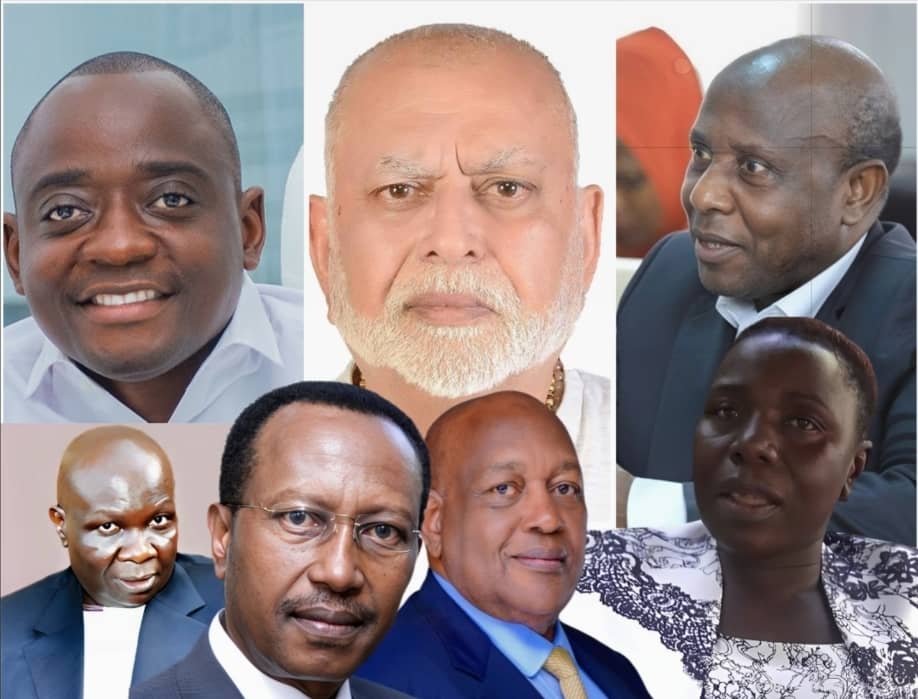
Uganda’s billionaire class in 2026 represents a concentrated tier of private capital that now exceeds 10 billion dollars in estimated combined wealth. In a 65 billion dollar economy, that level of aggregation is significant. Moreover, it reveals how asset ownership, rather than public equity markets, continues to define economic influence in Uganda.
Unlike financialized economies where stock exchanges shape billionaire rankings, Uganda’s wealth hierarchy is largely anchored in tangible assets. Commercial real estate, petroleum distribution, manufacturing and selective telecommunications equity form the backbone of private fortunes. As a result, Uganda’s billionaire class reflects control of physical infrastructure and recurring income streams rather than diversified listed portfolios.
At the same time, Uganda remains a lower-middle-income country with per capita income near 1,070 dollars. Therefore, the divergence between private capital growth and household income remains pronounced. Against this backdrop, the following analysis examines the leading figures who comprise Uganda’s billionaire class in 2026, based on asset-driven valuation estimates rather than audited declarations.
Hamis Kiggundu – Real Estate-Led Expansion
At the forefront of Uganda’s billionaire class stands Hamis Kiggundu, whose estimated net worth approaches 1.35 billion dollars. His capital base is primarily rooted in high-density commercial real estate across Kampala. Through successive construction cycles, he has reinvested rental income into mixed-use towers and large-scale retail complexes.
In addition, strategic land banking enhances long-term appreciation potential. Beverage manufacturing operations introduce industrial exposure, while fintech participation through Hamz Pay links part of his portfolio to digital payments growth. Furthermore, reported international holdings provide geographic diversification. Consequently, his structure blends domestic property dominance with emerging industrial and financial infrastructure exposure.
Sudhir Ruparelia – Conglomerate Diversification
Closely following is Sudhir Ruparelia, with estimated wealth near 1.2 billion dollars. His holdings span commercial property, hospitality, education, insurance and floriculture exports.
Commercial real estate anchors his balance sheet. However, hospitality assets such as Speke Resort Munyonyo introduce exposure to tourism cycles. Meanwhile, insurance and education generate more stable institutional revenue. Therefore, his model balances cyclical and defensive income streams within Uganda’s billionaire class.
The Central Business District Landlords
A defining segment of Uganda’s billionaire class consists of high-density urban property owners.
John Bosco Muwonge, with wealth estimated above 850 million dollars, maintains concentrated exposure to Kampala’s busiest commercial corridors. His arcades and multi-storey buildings generate recurring rent driven by tenant density and location scarcity.
Similarly, Drake Lubega has accumulated substantial CBD property holdings through Jesco Industries Limited. Rental income from arcades in high-footfall areas remains the core valuation driver, although industrial and education-linked assets add incremental diversification.
Mansour Matovu, whose wealth is estimated around 785 million dollars, illustrates how early trading capital can evolve into long-term property accumulation. Plazas such as MM Plaza generate sustained rental flows tied to the trading economy.
Collectively, these landlords demonstrate how control of prime inner-city land functions as a structural multiplier within Uganda’s billionaire class.
Diversified Industrial and Service-Sector Players
Beyond property, several members of Uganda’s billionaire class operate diversified enterprise structures.
Karim Hirji blends hospitality, automotive distribution and commercial real estate. The Imperial Hotels Group anchors tourism-linked revenue, while Cham Towers stabilizes asset value.
Guster Lule Ntake combines hospitality, agriculture and manufacturing. Food processing and beverage production introduce value-added industrial exposure. Therefore, his portfolio extends beyond rent-driven income into production-based revenue streams.
Amos Nzeyi represents a more industrial archetype. Beverage manufacturing through Crown Beverages Limited anchors his wealth. Food production and hospitality ventures provide additional recurring revenue. Consequently, his capital base reflects enterprise scale rather than land concentration alone.
Ahmed Omar Mandela, meanwhile, integrates petroleum retail, food services and agro-processing. City Oil generates liquidity, while hospitality brands capture urban consumer demand. Diversification across these sectors reduces reliance on a single revenue source.
Equity and Infrastructure Exposure
Not all members of Uganda’s billionaire class are property-dominant. Charles Mbire stands out for his equity-driven model. His shareholding in MTN Uganda ties valuation to corporate earnings, subscriber growth and dividend policy.
Furthermore, investments in energy and infrastructure broaden sector exposure. As a result, his wealth profile is more market-sensitive compared to purely land-backed peers.
Godfrey Kirumira also represents a hybrid structure. His wealth originates in petroleum distribution, yet diversification into telecommunications infrastructure and commercial property adds long-term stability.
Patrick Bitature, whose capital base was catalyzed by telecommunications distribution, expanded into energy infrastructure through Electro-Maxx and hospitality holdings. Infrastructure investments are capital-intensive; however, they provide asset-backed resilience when regulatory frameworks remain predictable.
A Frontier Market Pattern
Taken together, Uganda’s billionaire class reveals a consistent structural pattern. Wealth at the top is overwhelmingly anchored in income-producing tangible assets. Commercial property remains dominant. Petroleum distribution and manufacturing follow. Equity exposure, while present, plays a secondary role.
Moreover, access to development finance, land acquisition and scale-based distribution networks creates high entry thresholds. Consequently, capital compounds most rapidly for those controlling physical infrastructure rather than those reliant on wage income.
As Uganda advances toward oil production and deeper digital integration, the architecture of private wealth may gradually broaden. Nevertheless, in 2026, Uganda’s billionaire class continues to reflect a frontier market reality in which land, logistics and production capacity define economic leadership.