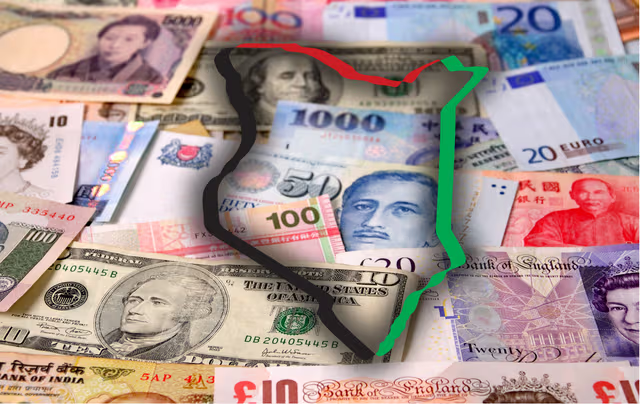
The Central Bank of Kenya (CBK) has issued a strong warning against the misuse of Kenya shilling banknotes. Specifically, the regulator says people increasingly use real notes in decorative gifts like cash flower bouquets, ornamental displays, and party favors. For instance, they fold, roll, glue, or pin actual banknotes into arrangements meant for weddings or birthdays.
However, this trend causes real harm. Once altered, these notes often cannot re-enter circulation. As a result, the CBK must replace them—at public expense. Moreover, this disrupts the smooth cash flow the bank works hard to maintain across the economy.
In fact, Kenya’s law treats banknotes as legal tender, not craft supplies. Section 32 of the Central Bank of Kenya Act clearly bans “mutilating, defacing, or otherwise damaging” currency. Therefore, turning real shillings into art—even with good intentions—violates the law. Consequently, the CBK now urges everyone to stop this practice immediately.
Beyond legality, damaged notes create practical headaches. ATMs and counting machines reject torn or glued bills. Because of this, bank tellers must handle them manually, which slows service. Additionally, businesses face delays and higher costs during cash reconciliation.
Worse still, decorative use drastically shortens a note’s life. Instead of circulating for months, it ends up crumpled or stuck in glue within days. Thus, the CBK prints replacements sooner than necessary—a cost that ultimately falls on taxpayers.
Thankfully, people can celebrate just as meaningfully without using real money. For example, they can send digital transfers, give gift cards, or use novelty “play money” clearly marked as non-legal tender. Similarly, event planners and florists should adopt these alternatives to avoid legal and economic risks.
After all, preserving clean, intact notes benefits everyone. It keeps commerce efficient, reduces fraud opportunities, and shows respect for national currency. Money exists to facilitate trade—not to decorate tables.
While cash bouquets come from generosity, the misuse of Kenya shilling banknotes creates hidden economic strain. That’s why the CBK asks Kenyans to rethink how they give gifts. Keep real money in wallets and registers—not in ribbons or photo frames.
Looking ahead, if this trend continues, the CBK may launch stronger awareness campaigns. For now, the message is simple: celebrate creatively, but protect your shillings. After all, they power the economy—not just parties.
READ: Kenya-Brazil Trade Ties: A New Era of Economic Cooperation