The Kenya Revenue Authority (KRA) plays a central role in Kenya’s tax administration system, helping individuals, businesses, and institutions comply with tax laws while supporting government revenue collection. For taxpayers in the capital city, accessing KRA services has become easier through strategically located offices across Nairobi. These offices provide assistance with services such as PIN registration, tax compliance certificates, filing support, customs inquiries, and business tax administration.
| Website | http://www.kra.go.ke/ |
|---|
As Kenya continues to digitize public services through platforms such as iTax and eCitizen, physical KRA offices still remain important for resolving complex tax matters, obtaining guidance, and handling compliance issues that may require in-person assistance. Whether you are a salaried employee, entrepreneur, importer, company director, or first-time taxpayer, understanding where KRA offices are located in Nairobi can save time and simplify tax-related processes.
KRA Offices in Nairobi
Below is a list of major Kenya Revenue Authority offices located within Nairobi and the services taxpayers commonly access there.
| Office | Location |
|---|---|
| Times Tower Office | 14th Floor, Times Tower, Haile Selassie Avenue |
| Sameer Park Office | Sameer Business Park, Mombasa Road |
| JKIA Office | Jomo Kenyatta International Airport, Airport North Road, Nairobi |
These offices serve different categories of taxpayers depending on the nature of services required, including domestic taxes, customs operations, cargo clearance, and business tax support.
Read Also: KRA Says Personal M-PESA Transfers Won’t Be Monitored
Times Tower Office
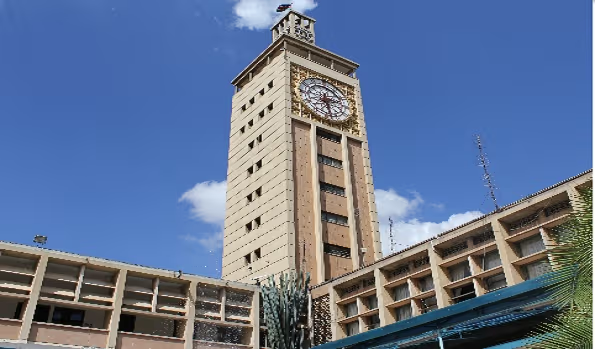
The Times Tower Office is the headquarters of the Kenya Revenue Authority and remains the most recognized KRA facility in the country. Located along Haile Selassie Avenue in Nairobi’s central business district, the building houses key administrative offices and taxpayer support departments.
Taxpayers visit Times Tower for services including:
- PIN registration and updates
- Tax compliance certificate applications
- Filing assistance
- VAT and income tax inquiries
- Appeals and dispute resolution
- Large taxpayer support
- Corporate tax administration
The office also hosts executive and policy divisions responsible for national tax administration and strategic planning.
KRA Headquarters Contacts
Location: Times Tower Building, Haile Selassie Avenue, Nairobi
Contacts:
- 020 4 999 999
- 0711 099 999
These contact channels are widely used by taxpayers seeking assistance with online filing issues, penalties, compliance verification, and general tax inquiries.
Sameer Park Office
The Sameer Park Office, located along Mombasa Road at Sameer Business Park, serves a growing number of taxpayers operating within Nairobi’s industrial and commercial zones. Its location makes it accessible for businesses operating in areas such as Industrial Area, South B, South C, and the wider Mombasa Road corridor.
Services commonly offered at this office include:
- Business tax support
- Domestic tax services
- PIN registration
- Tax return guidance
- Taxpayer education
- VAT registration support
The office is particularly convenient for businesses involved in logistics, manufacturing, wholesale trade, and transport services.
Read Also: KRA Landlord Registration: 5 Key Changes in New Tax Plan
JKIA Office
The JKIA Office is located at Jomo Kenyatta International Airport along Airport North Road. This office mainly handles customs and border-related operations tied to international trade and passenger movement.
The office is essential for:
- Customs clearance
- Import and export documentation
- Cargo processing
- Duty payment inquiries
- Customs enforcement support
- International trade facilitation
Businesses involved in importation, aviation logistics, courier services, and international commerce frequently interact with the JKIA office.
The Role of the Kenya Revenue Authority
The Kenya Revenue Authority is the government agency mandated to assess, collect, and account for taxes and other forms of revenue due to the Government of Kenya. The Authority was established under the Kenya Revenue Authority Act, which came into effect on July 1, 1995.
Since its formation, KRA has become one of the most important public institutions in Kenya’s economic framework. Revenue collected by the Authority supports sectors such as healthcare, education, infrastructure, security, and public administration.
Core Functions of KRA
The Authority performs several major functions under Kenyan law.
Revenue Collection
KRA is responsible for assessing and collecting taxes including:
- Income tax
- Value Added Tax (VAT)
- Excise duty
- Customs duty
- Pay As You Earn (PAYE)
- Corporate taxes
Tax Administration
The agency ensures compliance with tax laws while also offering taxpayer education and advisory services.
Policy Advisory
KRA advises the National Treasury and the government on revenue administration and tax-related matters.
Enforcement and Compliance
The Authority investigates tax evasion, smuggling, and fraudulent financial activities while enforcing customs and domestic tax laws.
Read Also: KRA Upgrades Cargo Monitoring with New User-Owned Electronic Seals
Digital Transformation at KRA
Over the years, KRA has heavily invested in digital platforms aimed at improving efficiency and reducing physical congestion at offices.
One of the most important developments has been the introduction of the iTax platform, which allows taxpayers to:
- File tax returns online
- Apply for compliance certificates
- Register for PINs
- Track tax obligations
- Check penalties
- Update taxpayer information
The digitization of tax services has significantly reduced paperwork and improved convenience for individuals and businesses across Kenya.
Despite these advancements, physical offices remain important for handling technical issues, audits, appeals, and taxpayer support services that may require direct interaction.
Proposed Transition from KRA to KRS
The Kenyan government has at times proposed changing the agency’s name from Kenya Revenue Authority (KRA) to Kenya Revenue Service (KRS). The proposed change was intended to reposition the institution as a citizen-focused service provider rather than merely an enforcement authority.
Supporters of the proposal argued that modern tax agencies should emphasize partnership with taxpayers, customer support, and service delivery rather than fear-based compliance.
Although the proposal attracted public discussion, KRA continues to operate under its current name.
Organizational Structure of KRA
The Kenya Revenue Authority operates through several specialized departments, each led by a commissioner responsible for overseeing key functions.
Customs & Border Control Department (C&BC)
This department handles customs administration, import duties, border security, and trade facilitation.
Domestic Taxes Department (DTD)
The Domestic Taxes Department oversees income tax, VAT, PAYE, and corporate taxation.
Intelligence & Strategic Operations Department
This division focuses on intelligence gathering and identifying tax-related risks and fraudulent schemes.
Investigations & Enforcement Department
The department investigates tax evasion, illegal trade practices, and revenue fraud.
Strategy, Innovation & Risk Management Department
This unit oversees modernization efforts, digital transformation, and institutional planning.
Read Also:KRA Launches WhatsApp Service for Tax Filing and 15 Other Services
Corporate Support Services Department
The department handles internal administration, finance, procurement, and human resources.
Legal Services & Board Coordination Department
This office manages legal matters, litigation, regulatory compliance, and board affairs.
Additional Departments Supporting KRA Operations
To improve efficiency and institutional coordination, KRA also maintains additional specialized divisions.
These include:
- Transformation and Leadership Office
- Kenya School of Revenue Administration (KESRA)
- Internal Audit Department
- Marketing and Communication Department
These units support institutional development, taxpayer engagement, governance, and staff training.
KRA Regional Structure in Kenya
To bring services closer to taxpayers across the country, KRA operates through several regional divisions.
Nairobi Region
Headquartered in Nairobi, this region serves the capital city and surrounding metropolitan areas.
North Rift Region
The North Rift regional office is based in Eldoret.
South Rift Region
This region operates from Nakuru.
Western Region
The regional headquarters is located in Kisumu.
Southern Region
This division is headquartered in Mombasa.
Northern Region
The Northern Region operates from Embu.
Central Region
The Central Region is based in Nyeri.
The regional structure allows KRA to decentralize taxpayer support and improve revenue administration across Kenya.
Leadership and Governance
The Kenya Revenue Authority operates under a Board of Directors and executive management team.
The Chairperson of the Board is Anthony Mwaura, while Humphrey Wattanga serves as the Commissioner General.
The leadership team oversees policy implementation, operational management, institutional reforms, and modernization programs aimed at improving revenue collection efficiency.
Kenya School of Revenue Administration (KESRA)
The Kenya School of Revenue Administration, commonly known as KESRA, is KRA’s premier training institution specializing in taxation, customs administration, fiscal policy, and revenue management.
KESRA is recognized internationally and serves as one of the few World Customs Organization accredited Regional Training Centres in Africa.
The institution plays an important role in:
- Training tax professionals
- Building customs expertise
- Supporting regional capacity development
- Conducting revenue administration research
Its programs attract professionals from Kenya and other African countries involved in tax and customs management.
Why Physical KRA Offices Still Matter
Although digital systems continue to improve, physical KRA offices remain highly relevant for many taxpayers.
Some services still require in-person support, especially:
- Complex tax disputes
- Audit resolutions
- Business registration clarification
- Customs documentation
- PIN recovery issues
- Technical iTax problems
- Enforcement inquiries
Businesses handling large transactions or international trade often rely on direct engagement with KRA officers for compliance and operational guidance.
Tips for Visiting KRA Offices in Nairobi
Before visiting a KRA office, taxpayers can save time by preparing the required documents and verifying whether the issue can be resolved online.
Helpful tips include:
- Carry your national ID or passport
- Have your KRA PIN details ready
- Print supporting documents if required
- Visit early to avoid long queues
- Confirm operating hours beforehand
- Use iTax first for basic services
Taxpayers are also encouraged to keep digital copies of important tax records for easier verification.
Frequently Asked Questions
Where is the KRA headquarters located?
The KRA headquarters is located at Times Tower Building along Haile Selassie Avenue in Nairobi.
What services are offered at KRA offices in Nairobi?
Services include PIN registration, tax return assistance, tax compliance certificates, VAT registration, customs services, and taxpayer support.
Can I access KRA services online?
Yes. Many services are available through the iTax portal, including filing returns, PIN applications, and tax compliance certificate requests.
Which KRA office handles customs services?
The JKIA Office mainly handles customs and international trade-related services.
Is it necessary to visit a KRA office physically?
Not always. Most basic services can be completed online, although some complex issues may require in-person support.
What is KESRA?
KESRA stands for Kenya School of Revenue Administration, KRA’s specialized training institution for tax and customs administration.
Conclusion
Understanding the locations and functions of KRA offices in Nairobi is important for individuals and businesses navigating Kenya’s tax system. While digital platforms such as iTax continue to simplify compliance, physical offices still provide essential support for taxpayers dealing with specialized or technical issues.
From the Times Tower headquarters to the Sameer Park and JKIA offices, KRA’s Nairobi network is designed to improve accessibility and service delivery for taxpayers across different sectors of the economy. As Kenya’s revenue administration continues evolving through technology and institutional reforms, these offices remain a critical link between taxpayers and government services.