A controversial request from a journalist has sparked a fierce backlash across social media. During a press conference ahead of the AFCON 2025 final, Ivorian journalist Mamadou Gaye asked CAF to strip East Africa of its hosting rights for AFCON 2027. Gaye claimed Kenya, Uganda, and Tanzania lack adequate roads and infrastructure. He suggested it could take “two days” to travel by road between the co-hosts. Furthermore, he questioned whether the tournament’s standards would be lowered. This prompted an immediate and forceful response from CAF President Patrice Motsepe, who defended the East African nations.
The journalist’s comments ignited instant outrage online. Many users called his remarks disrespectful and ignorant of East Africa’s development. Others pointed out that Kenya, Uganda, and Tanzania, operating under the “Pamoja” banner, are actively preparing for the tournament. CAF President Motsepe firmly shut down the suggestion. He stated he has a duty to develop football across the entire continent. Consequently, he expressed confidence that AFCON 2027 would be “enormously successful” in East Africa. The incident highlights ongoing perceptions and tensions within African football regarding regional representation and infrastructure.
CAF President’s Firm Defense of East Africa
Patrice Motsepe responded directly to the journalist’s provocative question. He emphasized his leadership role in developing football everywhere in Africa. “I have a duty to develop football all over Africa – I can’t have football only in those countries with the best infrastructure,” Motsepe stated. He affirmed his confidence in the success of the tournament. Most importantly, he declared, “We are not going to take the competition away from these countries.” This clear commitment ended any speculation about a last-minute change of host, similar to when Guinea lost the 2025 hosting rights to Morocco.
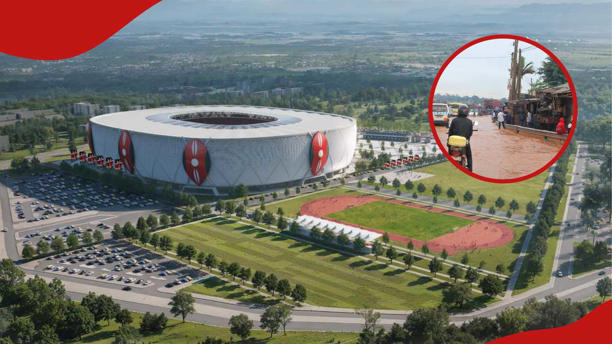
Motsepe’s stance reinforces CAF’s strategic goal of rotating the prestigious tournament across the continent’s regions. Awarding AFCON 2027 to East Africa is part of that vision. The president’s rebuttal also serves as a public vote of confidence in the preparations underway. Stadium projects and infrastructure upgrades are ongoing in all three nations. His statement aims to quell doubts and rally support behind the East African bid, which promises to bring the tournament to a region that has not hosted since 1976 (Ethiopia).
Online Backlash and Counterarguments
The reaction on social media was swift and severe. Critics accused Mamadou Gaye of spreading misinformation and holding outdated views. User Sirmoi Wekesa challenged him to travel to East Africa to witness the infrastructure investments firsthand. Another user, Captain Fish, suggested the question might be a tactical probe by CAF to gauge public reaction. They referenced Kenya being stripped of the 1996 hosting rights at the last minute, implying a historical bias against the region.
Many users offered direct comparisons to counter the journalist’s claims. User Trav noted that Ivory Coast’s cities are not more developed than major East African urban centers. This sentiment was echoed by others who argued that many previous host nations in West and Central Africa had significant infrastructure challenges themselves before their tournaments. The online defense transformed into a broader discussion about regional stereotypes, pan-African solidarity, and the visible progress in East Africa’s transport and sports infrastructure.
Context and Preparations for AFCON 2027
The Pamoja bid by Kenya, Uganda, and Tanzania was officially awarded the hosting rights in 2023. Since then, the three countries have been working on a joint plan. Key projects include renovating and constructing stadiums, improving airports, and upgrading road networks between host cities. Each country is expected to provide at least two match-ready stadiums. While challenges exist, as with any multi-host tournament, CAF has been conducting regular inspection visits to monitor progress.
The journalist’s comments downplay these concerted efforts. They also ignore the economic and social benefits expected from hosting such a mega-event. AFCON 2027 represents a historic opportunity for East Africa to showcase its growth and unity. The incident has inadvertently galvanized public support in the region for the tournament’s success. It has turned a negative question into a rallying point for national and regional pride ahead of the games.