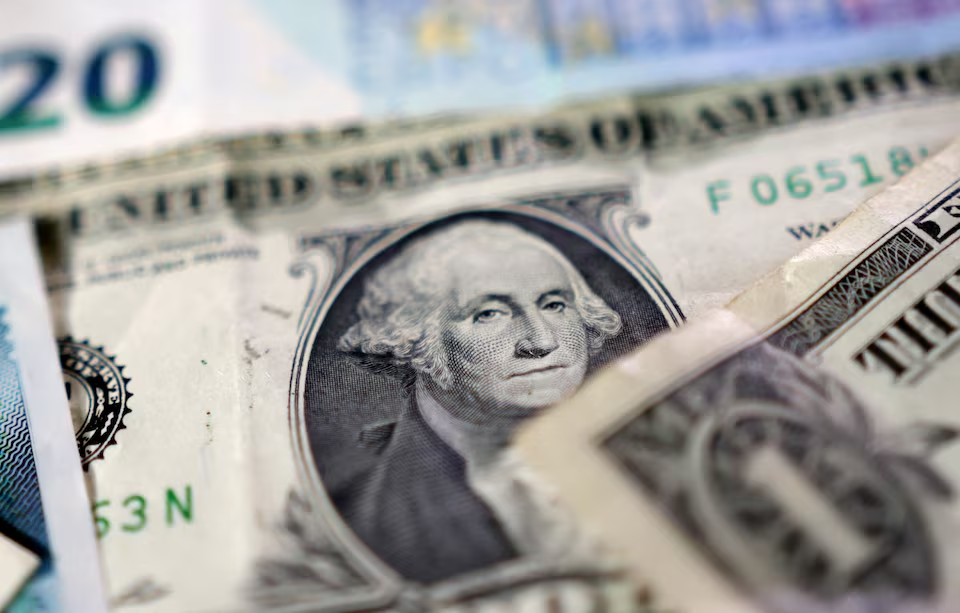
The US dollar is gaining ground after President Donald Trump named former Federal Reserve Governor Kevin Warsh as the next Chair of the central bank. These dollar gains also follow data showing US producer prices rose more than expected in December. Consequently, the dollar gains reflect a market view that Warsh will maintain Fed independence while supporting lower rates. The dollar gains come after a sharp selloff earlier in the week that analysts considered overdone. Therefore, the current dollar gains represent a technical rebound as well as a reaction to the nomination. Warsh is seen as likely to support lower interest rates but not advocate for aggressive easing. This perception is contributing to the dollar gains by easing fears of currency debasement. The dollar index rose 0.79% to 96.93, signaling broad-based dollar gains against a basket of major currencies.
Analysts note the dollar gains are partly driven by positioning ahead of the Fed announcement. Marc Chandler of Bannockburn Global Forex said the dollar was “terribly oversold” on short-term momentum. The dollar gains were extended after the producer price index indicated businesses are passing on higher costs from tariffs. While the dollar gains are notable, the greenback remains on track for a weekly loss against the yen. The geopolitical focus remains on Iran, but markets are primarily driven by the Fed news and data. Overall, the dollar gains suggest a recalibration of expectations toward a more orthodox, yet still accommodative, monetary policy path.
Market Reaction to the Warsh Nomination
The dollar gains are a direct response to President Trump’s selection of Kevin Warsh. Markets perceive Warsh as a “relatively safe choice” who will not radically undermine Fed independence. This perception has bolstered dollar gains by reducing uncertainty and fears of political pressure for extreme monetary easing. John Higgins of Capital Economics noted the reaction is consistent with Warsh not being “firmly in the president’s pocket.” The dollar gains indicate relief that the nominee is a known quantity with conventional policy leanings. Had Trump chosen a more controversial figure, the dollar might have fallen on concerns about institutional credibility. Instead, the dollar gains reflect approval of a candidate seen as balancing lower rates with central bank integrity.
Impact of Economic Data on Currency Movement
The dollar gains were reinforced by stronger-than-expected economic data. The US producer price index for December rose more than forecast, indicating persistent inflationary pressures. This data supports the case for the Fed to maintain a cautious approach to rate cuts, underpinning the dollar gains. The combination of the Warsh news and the PPI data created a supportive environment for the dollar gains. It shifted focus from the prior week’s dollar weakness, which was seen as overextended. The data-driven dollar gains show the currency remains sensitive to inflation metrics that influence Fed policy expectations.
Technical Rebound from Oversold Conditions
A key factor behind the dollar gains is a technical correction. The dollar had been sold off sharply earlier in the week, reaching oversold levels on short-term charts. Marc Chandler highlighted this oversold condition as a driver of the dollar gains. In such situations, even neutral or mildly positive news can trigger a rebound. The dollar gains, therefore, are not solely fundamental but also a function of market positioning and momentum reversal. Traders covering short dollar positions amplified the dollar gains, creating a self-reinforcing move higher.
Broader Forex Market Movements
While the dollar gains were broad, specific currency pairs showed notable action. The euro fell 0.79% to $1.1874, contributing significantly to the dollar index’s rise. The Japanese yen weakened 0.89% to 154.49 per dollar, though it remained on track for a weekly gain. The dollar gains against the yen were tempered by ongoing speculation about potential coordinated intervention to support the Japanese currency. The Treasury Department’s latest report removed a prior call for the Bank of Japan to keep raising rates, a subtle shift that may limit future dollar gains against the yen.
Cryptocurrency and Geopolitical Context
Outside traditional forex, bitcoin fell to its lowest level since November 21. This decline occurred alongside the dollar gains, though the correlation is not direct. Geopolitically, tensions with Iran remain a background factor, but they did not detract from the dollar gains driven by domestic policy and data. President Trump’s endorsement of a spending deal to avoid a government shutdown also provided some stability, indirectly supporting the dollar gains by reducing near-term fiscal uncertainty.
Read Also
Uganda Lowers Growth Forecast, Sets Crude Output Start
Gold Plunges in Steepest Daily Drop Since 1983
Outlook for the Dollar and Fed Policy
The sustainability of the dollar gains will depend on upcoming economic data and the Senate confirmation process for Warsh. Fed funds futures still price in about two rate cuts this year, beginning possibly in June. If Warsh’s testimony reinforces a moderate, data-dependent approach, the dollar gains could extend. However, if global growth fears resurface or US data softens, the dollar gains may prove temporary. The longer-term trend will hinge on whether the Fed under Warsh can navigate between supporting growth and preserving the currency’s value.
The dollar’s rise marks a significant shift after a period of weakness. The dollar gains stem from a nomination that reassures markets and data that suggests economic resilience. While geopolitical and fiscal issues linger, the immediate focus is on monetary policy continuity. The dollar gains reflect a vote of confidence in the transition at the Fed, setting the stage for the next chapter in US currency policy.