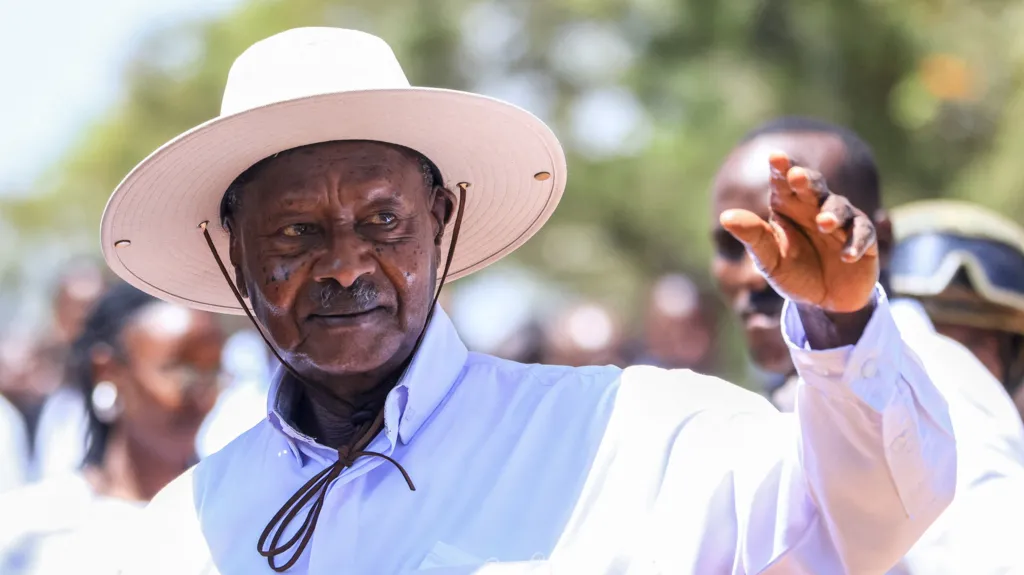
Kampala: Yoweri Museveni has been declared the winner of Uganda’s presidential election, a Museveni win that extends his rule beyond four decades and reshapes the country’s political landscape once again. The announcement follows a tense polling period marked by allegations of irregularities, heavy security deployment, and restricted communications nationwide.
According to the electoral commission, President Museveni secured 72 percent of the vote, defeating his closest challenger, Bobi Wine, who received 25 percent. The result grants Museveni another five-year term, reinforcing his position as one of Africa’s longest-serving leaders and renewing debate over democratic governance in Uganda.
The Museveni win immediately drew criticism from the opposition, with Bobi Wine rejecting the outcome and urging supporters to pursue non-violent resistance. He alleged ballot manipulation and intimidation during voting and tallying, claims that authorities have denied. While evidence has not been publicly presented, the dispute has intensified political tensions in the capital and other urban centres.
Security concerns have dominated the post-election environment. Reports from rights groups and opposition figures indicate that violence erupted in several districts during and after polling. Officials have confirmed a number of fatalities, although figures cited by opposition leaders are higher. The government maintains that security operations aimed to prevent unrest and protect public order.
Adding to the controversy, internet access was suspended days before voting and remains limited. Authorities argue the blackout was necessary to curb misinformation and incitement, but critics say it undermined transparency and citizens’ ability to verify results independently. International observers and human rights bodies have described the restrictions as troubling for electoral credibility.
President Museveni, who first took power in 1986 after a guerrilla war, has consistently portrayed himself as a stabilising force in a country with a history of conflict. During the campaign, he emphasized continuity, economic development, and security. In contrast, Bobi Wine centered his message on anti-corruption reforms, youth representation, and institutional change, appealing to a population where most citizens are under 30.
Police officials have acknowledged restricting opposition movements in what they describe as security-sensitive areas, a stance that opposition parties say curtailed campaigning and assembly. Despite these disputes, turnout stood at just over half of registered voters, with several minor candidates collectively accounting for a small share of the vote.
As Uganda absorbs the implications of the Museveni win, attention now turns to legal challenges, public protests, and international реакции. The coming days will test the country’s political resilience as leaders, institutions, and citizens navigate the aftermath of a fiercely contested election.