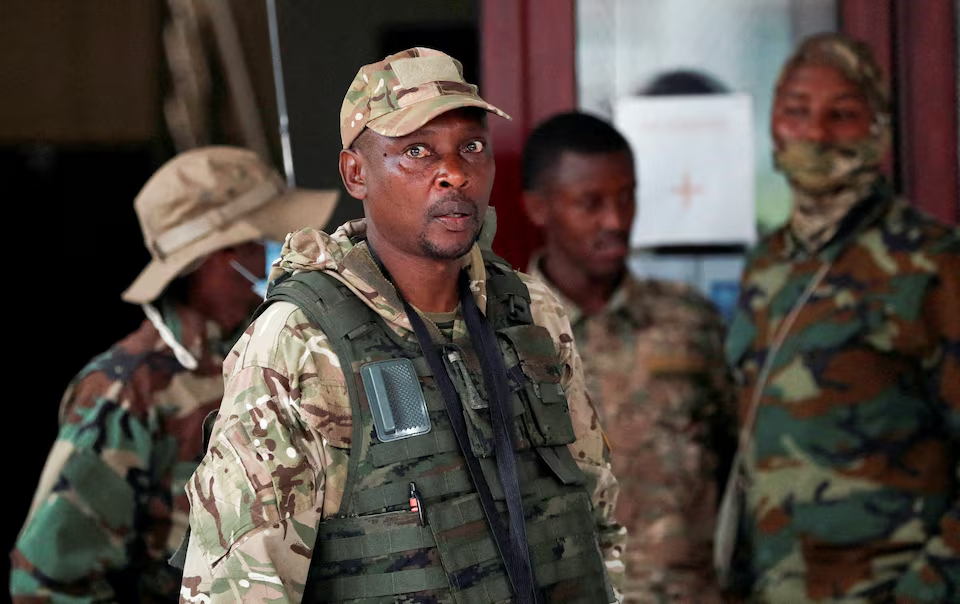
The military spokesperson for the M23 rebel group, Willy Ngoma, was killed in an army drone strike in eastern Democratic Republic of Congo on Tuesday. Two senior rebel officials, a regional diplomat and a Western adviser to the government confirmed the death. The M23 rebel spokesperson died near Rubaya in North Kivu at around 3 a.m. local time.
The attack followed several days of sustained drone strikes on the area by the Congolese army, one of the senior M23 officials told Reuters. Rubaya holds strategic significance as a coltan-mining hub producing approximately 15 percent of the world’s supply. The mining area serves as a key financial stronghold for the M23 rebels.
Strategic Mining Location
Rubaya’s mineral wealth makes it a critical asset for all parties in the conflict. Coltan is essential for electronics manufacturing, powering devices from smartphones to laptops. The region’s production levels give it global economic importance beyond the immediate conflict.
The Congolese government recently added Rubaya to a shortlist of strategic mining assets being offered to the United States under a minerals cooperation framework. This designation highlights the site’s importance to national economic strategy. Control of Rubaya translates directly into financial resources and geopolitical leverage.
For M23, the mining area provides funding for ongoing military operations. Rebel groups in eastern Congo have historically used mineral extraction to finance activities. The killing of the M23 rebel spokesperson near this valuable asset reflects the high stakes involved.
Fighting Intensifies Despite Mediation
Civil society sources reported heavy fighting in several localities near Rubaya since Sunday. The clashes forced hundreds of families to flee the area as violence escalated. Despite ongoing ceasefire efforts, military operations continue on both sides.
Ngoma’s death comes as Qatar-mediated ceasefire efforts continue between Kinshasa and M23. Both sides have signed agreements in Doha to establish a joint ceasefire monitoring and verification mechanism. Qatar, the United States and the African Union serve as observers to this process.
The contradiction between diplomatic engagement and continued fighting highlights the challenges of peacemaking in eastern Congo. Signing agreements at the political level does not always translate into battlefield restraint. Local commanders may continue operations while negotiations proceed.
Sanctions and Rebel Leadership
Ngoma had been under European Union sanctions since December 2022 for his role as the M23 spokesperson. The sanctions reflected international condemnation of the group’s activities and human rights record. His death removes a prominent figure from the rebel leadership structure.
The impact on M23 operations remains unclear. Rebel groups often adapt quickly to leadership losses, promoting replacements from within ranks. However, Ngoma’s visibility as spokesperson gave him a unique role in media and communication strategy. His absence may affect the group’s ability to convey its message.
The M23 rebel spokesperson position involves presenting the group’s perspective to domestic and international audiences. Ngoma served as the public face of the rebellion, explaining its objectives and responding to government claims. Finding a replacement with similar communication skills could prove challenging.
Regional Context and Rwandan Allegations
M23, which the United Nations says is backed by Rwanda, controls large swathes of North and South Kivu provinces. The group seized the strategic cities of Goma and Bukavu during a rapid offensive last year. These territorial gains represent the most significant rebel advances in years.
Rwanda has consistently denied supporting M23 despite extensive evidence cited by UN experts and multiple governments. The alleged backing adds regional dimensions to what might otherwise appear as an internal Congolese conflict. Relations between Congo and Rwanda remain tense over the issue.
The rebels briefly captured the city of Uvira in December, though the Congolese army retook it last month. Congo reopened its border with Burundi there on Monday, signaling some normalization in that area despite broader conflict. The border reopening facilitates trade and movement for local populations.
UN Peacekeeping Response
The UN peacekeeping mission in Congo deployed a joint exploratory assessment team to Uvira this week. The team aims to support implementation of the ceasefire monitoring mechanism agreed in Doha. They will also evaluate security conditions in the area to guide future peacekeeping operations.
UN peacekeepers have operated in eastern Congo for decades with mixed results. The current mission faces challenges from well-armed rebel groups and complex local dynamics. The deployment to Uvira demonstrates continued UN engagement despite these difficulties.
The ceasefire monitoring mechanism represents an attempt to create structure around the Doha agreements. Observers from Qatar, the US and African Union provide international oversight. However, effective monitoring requires access and cooperation from all parties.
Humanitarian Consequences
Fighting near Rubaya has forced hundreds of families to flee their homes. Displaced populations face immediate needs for shelter, food and medical care. Eastern Congo already hosts millions of displaced people from years of conflict.
The humanitarian situation compounds existing vulnerabilities in one of Africa’s most unstable regions. Aid organizations struggle to access affected populations due to security concerns. Displacement disrupts livelihoods and separates families.
Civil society sources report ongoing fighting in several localities, suggesting displacement will continue. Without durable ceasefire, more civilians will flee their homes. The humanitarian toll of conflict extends far beyond combatant casualties.
Ceasefire Prospects
The killing of the M23 rebel spokesperson complicates already fragile ceasefire efforts. Such high-profile deaths often trigger retaliation and escalate violence. M23 may feel compelled to respond militarily to restore deterrence.
However, both sides continue engaging in Doha-mediated talks despite battlefield operations. This suggests a pragmatic approach where diplomacy and fighting proceed simultaneously. Parties may use military pressure to improve negotiating positions.
The joint monitoring mechanism could provide framework for de-escalation if properly implemented. Observers must have access to verify compliance and report violations. Trust between parties remains minimal after years of conflict.
Mineral Wealth as Conflict Driver
Rubaya’s coltan deposits exemplify how mineral wealth fuels Congo’s conflicts. Armed groups extract resources to fund operations, creating incentives to maintain instability. Government efforts to secure mining areas face determined resistance.
The proposed minerals cooperation framework with the United States adds new dimension to resource politics. Congo seeks to attract international investment while asserting control over strategic assets. However, ongoing conflict undermines investment appeal.
Global demand for coltan continues growing with electronics consumption. This demand creates persistent value that armed groups can exploit. Breaking the resource-conflict link requires governance improvements and international cooperation.
Looking Forward
The death of the M23 rebel spokesperson marks a significant event in eastern Congo’s long conflict. Whether it leads to escalation or creates opening for peace depends on subsequent actions. Both sides face choices about retaliation versus restraint.
International mediators continue pressing for ceasefire implementation despite battlefield violence. The Qatar process represents the most significant diplomatic effort in recent months. Its success requires genuine commitment from all parties.
For civilians near Rubaya, immediate concerns center on safety and displacement. Military operations bring danger regardless of which side prevails. Protection of civilians must remain priority alongside political negotiations.
The killing near the coltan mine highlights how mineral wealth and violence intersect in eastern Congo. Until this connection is broken, peace will remain elusive. The M23 rebel spokesperson’s death becomes another chapter in a seemingly endless conflict.