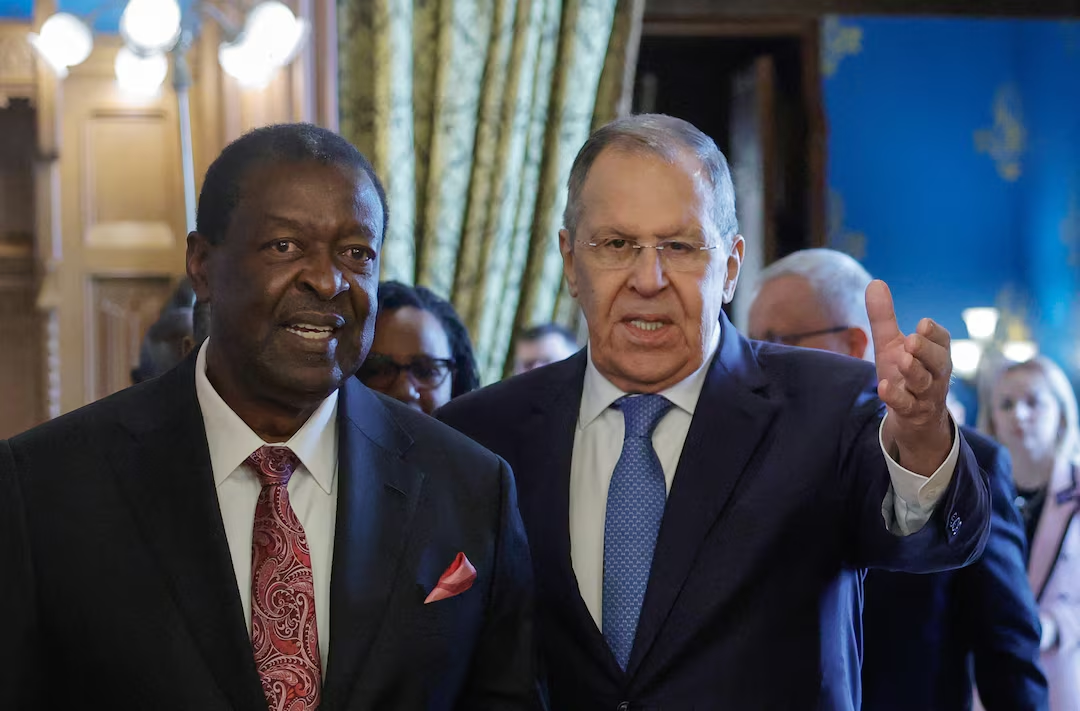
Kenya announced Monday that it has agreed with Russia to stop Kenyans fighting for Russia in the Ukraine war, following concerns about recruitment networks and pressure from affected families. Foreign Minister Musalia Mudavadi made the announcement after meeting Russian Foreign Minister Sergei Lavrov in Moscow. The Kenyans fighting for Russia issue has triggered anger as more than 1,000 Kenyan citizens have been recruited, attracted by monthly salaries of several thousand dollars and bonuses exceeding $6,000.
Mudavadi said at a joint news briefing that agreement had been reached to no longer allow Kenyans to sign up through the Russian Ministry of Defence. “There will no further enlisting,” he stated. The Kenyans fighting decision followed an intelligence report presented to Kenyan lawmakers in February showing recruitment five times higher than previously estimated.
Consular Arrangements
Mudavadi addressed the welfare of Kenyans already involved in what the Kremlin calls its “special military operation.” He said consular services would be organized through proper diplomatic channels for those who had already signed up and required assistance. The Kenyans fighting agreement includes provisions for supporting citizens already deployed.
Lavrov stated that Kenyan citizens had voluntarily signed contracts to fight alongside the Russian army. The Kenyans recruitment has drawn attention to broader patterns of foreign fighters in the conflict. Kyiv claims over 1,700 Africans are fighting on the Russian side, though exact numbers remain unclear.
Family Pressure
Before traveling to Moscow, Mudavadi told Reuters he hoped to stop Kenyans enlisting. “We want Kenyans stopped – they should not be enlisted at all,” he said. The Kenyans fighting issue generated significant political pressure as affected families gained courage to come forward. “We are getting a lot of pressure from some of the affected families who are now gathering more courage to come forward and speak to the issue,” Mudavadi explained.
Kenyan politicians have described networks of rogue state officials colluding with human trafficking syndicates to recruit citizens. The Kenyans fighting recruitment appears to involve both legal contracting through military channels and illicit trafficking operations. Authorities are investigating the full scope of these activities.
Broader Relations
Mudavadi emphasized that Kenya-Russia relations extend beyond the Ukraine conflict. He praised the relationship including Soviet recognition of Kenyan independence from Britain in 1963. The Kenyans fighting for Russia agreement allows both countries to address a contentious issue while preserving broader diplomatic ties.
“We do not want for any reason our partnership with Russia to be defined from the lenses of the special operation agenda only,” Mudavadi said. He cited potential cooperation in energy, tourism, and agriculture as areas for expanded relations. The Kenyans fighting for Russia resolution removes one obstacle to broader engagement.
Recruitment Economics
The financial incentives driving Kenyans fighting for Russia reflect economic pressures at home. Monthly salaries of several thousand dollars far exceed typical Kenyan wages. Bonuses over $6,000 for contract soldiers represent life-changing sums for many families. These economic realities create continuing vulnerability to recruitment offers despite government opposition.
The Kenyans fighting phenomenn highlights how global conflicts intersect with local economic conditions. Desperate job seekers may accept risks they would otherwise avoid when alternatives are scarce. Addressing root causes requires economic development alongside diplomatic agreements.
Investigation Ongoing
Kenyan authorities continue investigating recruitment networks that allegedly involve rogue officials. The Kenyans fighting for Russia intelligence report suggested systematic trafficking rather than isolated incidents. Prosecutions may follow as evidence accumulates and families provide testimony.
Human trafficking charges could carry significant penalties if officials and recruiters are convicted. The Kenyans fighting for Russia case adds to global concerns about illicit recruitment for foreign conflicts. International cooperation will be essential for dismantling transnational networks.
Regional Context
Other African countries have also seen citizens recruited to fight in Ukraine. The Kenyans fighting for Russia agreement may set precedent for similar arrangements with other nations. African governments increasingly demand accountability for their citizens recruited into foreign wars.
The broader phenomenon of African fighters in Ukraine reflects Russia’s outreach across the continent. Moscow has cultivated relationships with multiple African governments while also recruiting individual fighters. The Kenyans fighting for Russia resolution demonstrates that such recruitment carries diplomatic costs even when governments maintain overall positive relations.
Humanitarian Concerns
Families of Kenyans fighting for Russia face uncertainty about loved ones’ welfare. Communication is difficult from active conflict zones. Casualty information may be unavailable or unreliable. The Kenyans fighting for Russia agreement includes consular provisions but cannot guarantee safety of those already deployed.
Returning fighters may face physical and psychological challenges. The Kenyans fighting for Russia issue will require long-term support structures regardless of diplomatic agreements. Government and civil society must prepare to assist citizens who eventually come home.
Looking Forward
The Kenyans fighting for Russia agreement represents diplomatic success in addressing a sensitive issue. Both sides maintained positive framing while resolving substantive concerns. Implementation will require continued cooperation to ensure no further enlistment occurs.
Mudavadi’s Moscow visit strengthened broader bilateral ties while securing the Kenyans fighting for Russia commitment. Future cooperation in energy, tourism, and agriculture may expand as political obstacles are removed. The agreement demonstrates that even contentious issues can be resolved through diplomatic engagement when both sides prioritize relationship maintenance.