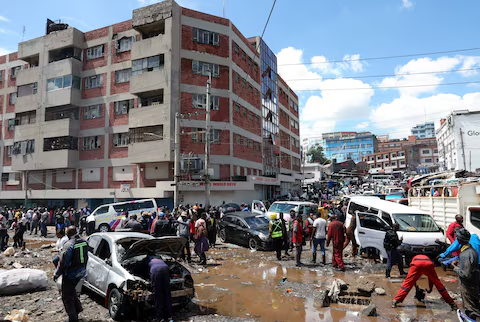
The Kenya flood death toll nearly doubled to 42, the government announced late Sunday. Intense rains on Friday unleashed widespread flooding across Nairobi and other areas. The previous count stood at 23 victims. Floodwaters washed away vehicles and disrupted traffic at the country’s largest airport. Emergency workers from multiple agencies including the military continue conducting search and rescue operations.
Geoffrey Kiringa Ruku, minister for public service and human capital development, issued the updated Kenya flood death toll in an official statement. “Search mission is still in progress by the multi agency emergency response teams with the aim of ensuring that bodies of all the flood victims are found and retrieved,” he said. The floods have also done extensive damage to infrastructure and livelihoods. Authorities have recovered 172 vehicles that flood waters swept away.
Rescue Efforts Continue
Emergency responders face challenging conditions as they search for additional victims. The Kenya flood death toll may rise further as teams reach isolated areas. Military personnel joined civilian agencies in coordinated rescue operations. They are working to clear debris and access communities cut off by damaged roads.
The government has not specified how many people remain missing. Officials continue urging residents in flood-prone areas to relocate to higher ground. The Kenya flood death toll reflects the severity of Friday’s downpour, which dumped exceptional rainfall in a short period. Climate scientists link such extreme events to broader weather pattern changes.
Government Response
President William Ruto ordered immediate release of relief food from national strategic reserves on Saturday. Supplies will go to families affected by the flooding. The Kenya flood death toll prompted rapid humanitarian mobilization. Distribution networks face challenges from damaged transport infrastructure.
The government statement emphasized ongoing efforts to support affected communities. Beyond casualty numbers, officials are assessing damage to homes, businesses, and public facilities. The Kenya flood death toll represents only one dimension of the disaster’s impact. Economic losses will likely prove substantial.
Read Also
Climate Change Intensifies East Africa Floods, Study Finds
Nairobi Infrastructure Overwhelmed by Extreme Rainfall
Kenya Disaster Response: Military Mobilizes for Rescue
Regional Context
Scientists say global warming is worsening floods and droughts across East Africa. Climate change concentrates rainfall into shorter, more intense bursts. A 2024 World Weather Attribution study found climate change made devastating rains in the region twice as likely as before. The Kenya flood death toll fits this broader pattern of increasing extreme weather events.
East African nations face growing infrastructure challenges as weather patterns shift. Drainage systems designed for historical rainfall levels prove inadequate for current conditions. The Kenya flood death toll highlights urgent needs for adaptation investments. Urban planning must account for more frequent extreme events.
Airport Disruption
Flooding disrupted operations at Jomo Kenyatta International Airport, East Africa’s busiest aviation hub. Floodwaters affected access roads and some ground operations. The Kenya flood death toll includes victims from areas near the airport. Travelers faced delays as authorities worked to clear water and restore normal operations.
Airport authorities have not released detailed damage assessments. The disruption affects regional connectivity and commerce. Kenya serves as a transportation gateway for neighboring countries without coastal access. Prolonged airport issues would have cascading economic effects beyond the Kenya flood death toll.
Infrastructure Damage
Beyond human tragedy, the floods destroyed roads, bridges, and drainage systems. The Kenya flood death toll reflects only part of the disaster’s impact. Many communities face weeks or months without normal services. Recovery costs will strain government budgets already facing multiple demands.
The 172 recovered vehicles represent a fraction of property damage. Homes and businesses throughout affected areas suffered water damage. Insurance claims will likely rise substantially. The Kenya flood death toll drives immediate response, but long-term recovery requires sustained attention and resources.
Climate Implications
Scientists emphasize that such events will become more common without emissions reductions. The Kenya flood death toll provides tragic evidence of vulnerability. East Africa’s rapid urbanization places more people in harm’s way. Informal settlements with poor drainage suffer disproportionate impacts.
International climate discussions increasingly focus on adaptation funding. Developed countries have pledged support for infrastructure that can withstand extreme weather. The Kenya flood death toll strengthens arguments for accelerating these investments. Every delayed project leaves populations exposed to preventable risks.
Community Impact
Families in affected areas face immediate grief and long-term uncertainty. The Kenya flood death toll includes people across multiple demographics. Children, elderly, and working-age adults all perished in the flooding. Survivors must rebuild while mourning.
Community organizations have mobilized to support affected families. Local networks often provide first response before official help arrives. The Kenya flood death toll could have been higher without such mutual aid. Strengthening community resilience represents a key adaptation strategy.
Looking Forward
Authorities will continue search operations until they account for all missing persons. The Kenya flood death toll may increase in coming days. Recovery efforts will then shift to rebuilding and prevention. Officials face pressure to improve drainage and early warning systems before the next rainy season.
President Ruto’s relief food order addresses immediate hunger needs. Longer-term support will require more comprehensive planning. The Kenya flood death toll should catalyze policy action on multiple fronts. Whether it does depends on political will and resource availability.
For now, rescue teams continue their work. Families mourn the dead. Survivors assess losses. The Kenya flood death toll stands at 42, with fears it could rise further. A nation already facing economic challenges now confronts natural disaster’s human cost.