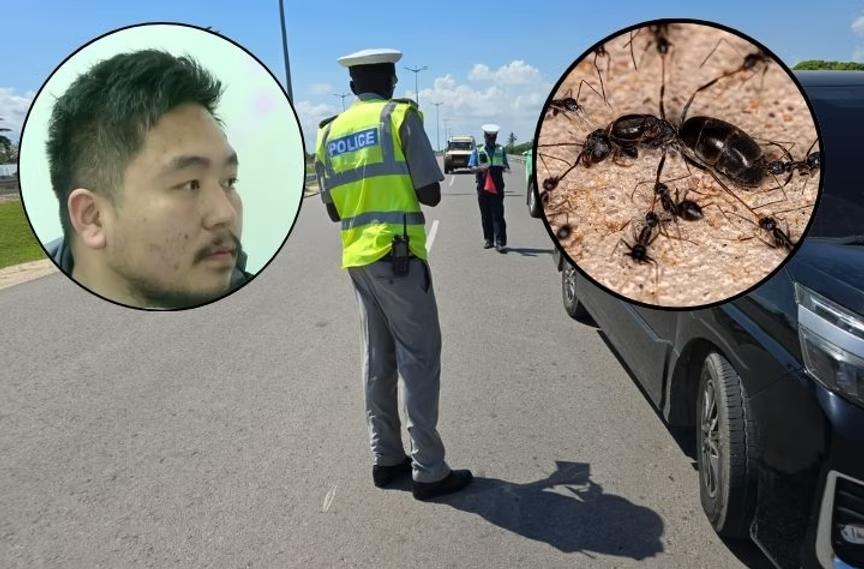
Kenyan prosecutors on Monday arraigned a local man accused of supplying live ants to foreign traffickers, expanding a wildlife smuggling case that highlights shifting trends in illegal wildlife trade. The Kenya ant smuggling case against Charles Mwangi was heard at the Jomo Kenyatta International Airport court. Prosecutors believe Mwangi supplied ants to Chinese national Zhang Kequn, who was arrested last week at Nairobi’s main airport with more than 2,000 live garden ants in his luggage.
Police conducted a search of Mwangi’s house and recovered significant evidence. They found 1,000 unpackaged live garden ants, 113 live garden ants packaged in modified syringes, and 503 empty syringes. Theant smuggling case now ks Mwangi to a broader network operating across multiple Kenyan counties and internationally.
International Connections
Prosecutors also linked Mwangi to a consignment of ants seized in Bangkok on March 10 that originated from the Kenyan port city of Mombasa. The Kenya ant smuggling case reveals connections to accomplices in several Kenyan counties, suggesting organized trafficking rather than isolated incidents. Authorities continue investigating the full scope of the network.
Theant smuggling case follows last year’s prosecution of four men fined $7,700 each for attempting to traffic thousands of ants out of Kenya. Experts say such cases signal a shift in biopiracy from traditional trophies like elephant ivory to lesser-known species. Ant trafficking now represents a growing concern for wildlife authorities.
Market for Ants
Ant aficionados pay large sums to maintain colonies in formicariums, large transparent vessels offering views into the species’ complex social structures and behaviors. The ant smuggling case highlights demand for live specimens from collectors worldwide. Modified syringes found in Mwangi’s home suggest sophisticated packaging methods to keep ants alive during transport.
The illegal wildlife trade has traditionally focused on high-profile species like elephants, rhinos, and pangolins. The ant smuggling case demonstrates that even insects attract criminal networks when rare species or large quantities command premium prices. Authorities must now develop expertise in identifying and intercepting such unusual contraband.
Investigation Details
The Kenya ant smuggling case investigation began with Zhang’s arrest at Jomo Kenyatta International Airport. Authorities found more than 2,000 live garden ants in his luggage, leading to questions about local suppliers. Mwangi’s arrest followed after evidence linked him to Zhang and the Bangkok seizure.
Prosecutors presented the case at the airport court, which handles wildlife trafficking and other transnational crimes. Theant smuggling case will test whether penalties for insect trafficking match those for more traditional wildlife crimes. Conservation groups advocate for severe sentences to deter future smuggling.
Biopiracy Concerns
Beyond illegal wildlife trade, the Kenya ant smuggling case raises biopiracy issues. Ants collected from Kenyan ecosystems may include undiscovered species or genetic material valuable for research. Unauthorized removal of biological specimens deprives Kenya of potential benefits from its biodiversity.
The ant smuggling case highlights gaps in regulation of insect collection and export. While elephant ivory and rhino horn receive extensive attention, insects fall into regulatory gray areas. Authorities now recognize need for comprehensive approaches to all wildlife trafficking regardless of species size or charisma.
Modus Operandi
The modified syringes recovered from Mwangi’s home reveal trafficking methods. Syringes provide small, concealable containers that maintain humidity and protect ants during transit. The ant smuggling case shows traffickers adapting packaging techniques originally developed for other purposes.
Empty syringes awaiting filling suggest ongoing operation rather than one-time activity. The ant smuggling case may represent just one node in larger trafficking network. Investigators continue analyzing evidence to identify additional participants and destination markets.
Legal Proceedings
Mwangi appeared before the airport court Monday for formal charges. The ant smuggling case will proceed through Kenya’s judicial system with prosecutors seeking conviction and appropriate sentencing. Zhang faces separate proceedings following his airport arrest.
The court will consider evidence including recovered ants, packaging materials, and testimony linking Mwangi to international seizures. The ant smuggling case outcome may influence how seriously future insect trafficking cases are treated by Kenyan courts and prosecutors.
Conservation Implications
Each ant colony removed from Kenyan ecosystems represents loss of biodiversity. The ant smuggling case involves garden ants rather than endangered species, but trafficking creates pathways for more significant biopiracy. Establishing strong enforcement now prevents escalation to rare or protected insect species.
Conservation groups applaud the Kenya ant smuggling case prosecution as sign of growing awareness. Wildlife authorities increasingly recognize that all species deserve protection from commercial exploitation. Public education about ant trafficking harms may reduce demand over time.
International Cooperation
The link between Kenya ant smuggling and Bangkok seizure demonstrates need for international cooperation. The Kenya ant smuggling case involved information sharing between Kenyan authorities and Thai counterparts who intercepted the Mombasa-origin consignment. Such collaboration proves essential for disrupting transnational wildlife crime networks.
Interpol and other international bodies facilitate information exchange on wildlife trafficking. The Kenya ant smuggling case will contribute to broader understanding of insect trafficking patterns and methods. Lessons learned may help other countries strengthen enforcement against similar crimes.
Looking Forward
The Kenya ant smuggling case now proceeds through court while investigations continue. Authorities hope prosecution will deter others considering involvement in ant trafficking. The case also raises awareness among airport staff, postal workers, and others who might encounter suspicious packages.
For conservation advocates, the Kenya ant smuggling case represents progress in protecting all biodiversity regardless of species popularity. Ants may lack the charisma of elephants or rhinos, but their ecological roles prove equally important. Successful prosecution sends message that Kenya takes all wildlife crime seriously.