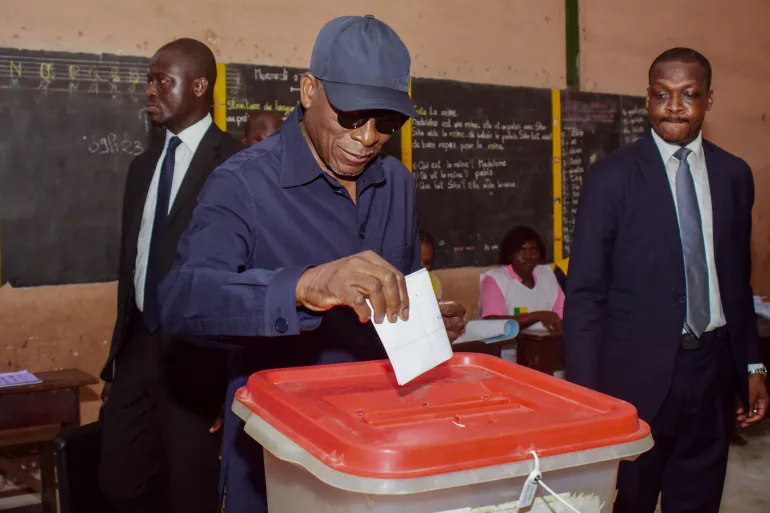
Benin’s ruling political alliance has secured total control of the National Assembly. Provisional results from the January 11 Benin parliamentary election show parties aligned with President Patrice Talon won all 109 seats. The electoral commission announced the Progressive Union for Renewal will hold 60 seats, and the Republican Bloc will hold 49. This outcome eliminates opposition representation in parliament entirely. The main opposition party, The Democrats, failed to meet a stringent new electoral threshold. Consequently, these results solidify the president’s power base ahead of a pivotal presidential election in April.
The new electoral code requires parties to win 20% of the national vote and 20% in each of Benin’s 24 electoral districts to gain seats. The Democrats received about 16% nationally, falling short. A party spokesperson denounced the rules as “exclusionary” and designed to favor pro-government parties. This Benin parliamentary election followed a failed military coup attempt in December. Turnout was a modest 36.7%, similar to the previous legislative poll. The results pave the way for President Talon’s handpicked successor, Finance Minister Romuald Wadagni, to run in the upcoming presidential race without a parliamentary opposition.
Context of the Controversial Electoral Code
The electoral framework has been a major point of contention. Implemented before this Benin parliamentary election, the code created high barriers for smaller parties. The Democrats argued it was tailored to sideline them. Their prediction proved accurate. Without meeting the 20% thresholds, even a significant share of the vote yields zero seats. This system consolidates power in the hands of the two largest pro-Talon parties. Opposition figures and some international observers have criticized the rules as undermining multiparty democracy.
The impact extends beyond parliament. The same signature-gathering rules that blocked The Democrats from the Benin parliamentary election also barred them from recent local elections. Furthermore, they cannot field a candidate in the April presidential vote. This effectively removes the most organized opposition force from all levels of government. Spokesperson Guy Mitokpe called the code proof of an exclusionary strategy. The result is a legislature and upcoming presidential contest with no formal opposition participation, a rare situation in a historically stable democracy like Benin.
Political Landscape and Succession Plans
President Patrice Talon, a former cotton magnate, has led Benin for a decade. A constitutional reform in November extended presidential terms to seven years but kept a two-term limit. Talon is therefore ineligible to run again in April. His presumed successor is Finance Minister Romuald Wadagni, an architect of Benin’s economic policy. With the ruling alliance now holding all parliamentary seats, Wadagni would operate with a legislature completely aligned with the executive branch, assuming he wins the presidency.
This consolidation of power occurs amid regional instability. The December coup attempt, though quickly foiled, highlighted underlying tensions. The government attributed the plot to foreign-backed military personnel. A month later, this Benin parliamentary election has further centralized authority. Supporters of Talon argue the development-focused government needs a strong mandate to continue its agenda. Critics see it as the final step in dismantling Benin’s once-vibrant pluralistic democracy, transforming it into a de facto one-party state.
Regional Implications and Democratic Backsliding
Benin was once hailed as a model of democratic progress in West Africa. The current shift is part of a broader regional trend of democratic backsliding and extended presidential tenures. Neighboring countries like Togo and Ivory Coast have also seen leaders consolidate power. The Benin parliamentary election results will be closely analyzed by regional partners and international bodies. The lack of opposition voices in parliament challenges the norms of representative democracy.
The low voter turnout of 36.7% suggests possible public apathy or disillusionment with the electoral process. When citizens perceive the outcome as predetermined, participation often declines. This legitimacy deficit could pose long-term challenges for stability. The government will likely point to the peaceful conduct of the vote and the technical application of the law as validation. However, the complete exclusion of the opposition marks a significant departure from the competitive politics that characterized Benin for decades.